Understanding Your Home Electrical System Room by Room
Reading time: 14 minutes
Ever flipped a breaker at midnight because your kitchen appliances tripped the circuit — again? Or wondered why the lights in your living room flicker every time someone runs the microwave? You’re not alone. Millions of homeowners interact with their electrical systems every single day without truly understanding what’s happening behind the walls.
Here’s the straight talk: your home’s electrical system isn’t just a utility — it’s a safety infrastructure. Understanding it room by room doesn’t just prevent inconvenience; it can prevent fires, reduce energy bills, and save you thousands in avoidable repairs. In 2026, with smart home integration accelerating and EV charging becoming a household necessity, electrical literacy has never been more critical.
This guide breaks down your home’s electrical system in plain English, moving from room to room so you can confidently identify what you have, what it means, and what to do about it.
Table of Contents
- The Basics: How Your Home Electrical System Works
- The Electrical Panel: Your Home’s Command Center
- Kitchen: The Highest-Demand Room in Your Home
- Bathroom: Safety First in Wet Environments
- Living Room and Bedroom: Comfort, Entertainment, and Smart Tech
- Garage, Laundry Room, and Outdoor Spaces
- Common Electrical Challenges and How to Solve Them
- Energy Load Comparison by Room
- Room-by-Room Electrical Requirements at a Glance
- Frequently Asked Questions
- Power Up Your Home: Your Action Plan
The Basics: How Your Home Electrical System Works
Before we go room by room, let’s build a mental map. Electricity enters your home from the utility company through a service entrance — typically overhead lines or an underground feed. It passes through a meter (which your utility reads to calculate your bill), then flows into your main electrical panel, also called the breaker box or load center.
From the panel, electricity travels through branch circuits — dedicated pathways of wiring that serve specific areas or appliances in your home. Each circuit is protected by a circuit breaker (or in older homes, a fuse) that cuts power if the circuit becomes overloaded or develops a fault.
Most North American homes operate on a 120/240-volt split-phase system. Standard outlets and lights run on 120V circuits, while heavy appliances like dryers, electric ranges, and EV chargers require 240V dedicated circuits.
As of 2026, the National Electrical Code (NEC) 2026 edition has introduced updated requirements around arc-fault circuit interrupters (AFCIs) and ground-fault circuit interrupters (GFCIs), expanding protections to more rooms and circuit types than ever before. Understanding these basics sets the foundation for everything else in this guide.
Key Electrical Terms You Should Know
- Amperage (Amps): The volume of electrical current flowing through a circuit. More amps = more capacity.
- Voltage (Volts): The pressure driving electricity through the wire.
- Wattage (Watts): The actual power consumed. Calculated as Volts × Amps.
- GFCI (Ground Fault Circuit Interrupter): A safety outlet or breaker that shuts off power instantly if it detects a ground fault — critical near water.
- AFCI (Arc Fault Circuit Interrupter): A breaker that detects dangerous electrical arcing, a leading cause of house fires.
- Dedicated circuit: A circuit that serves only one appliance or outlet, ensuring it always has the power it needs.
The Electrical Panel: Your Home’s Command Center
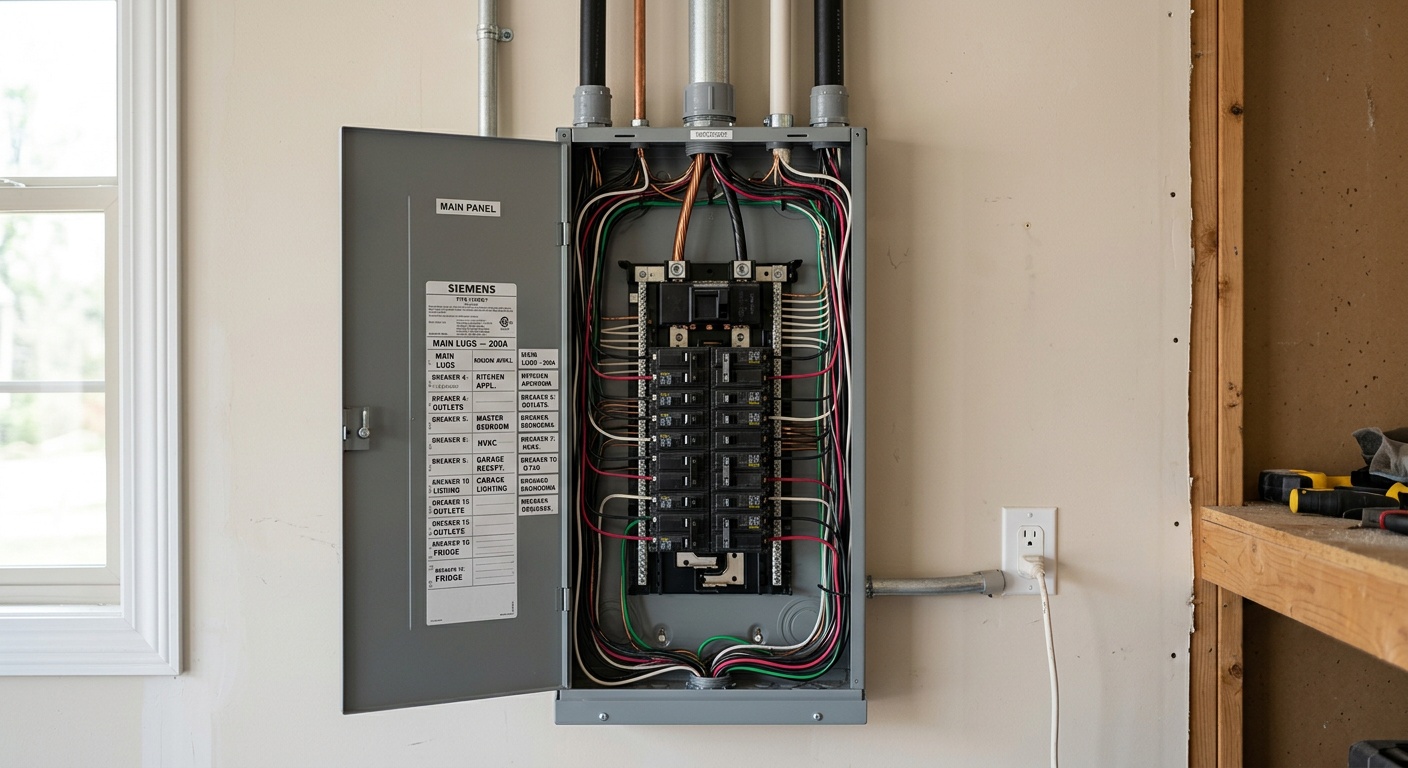
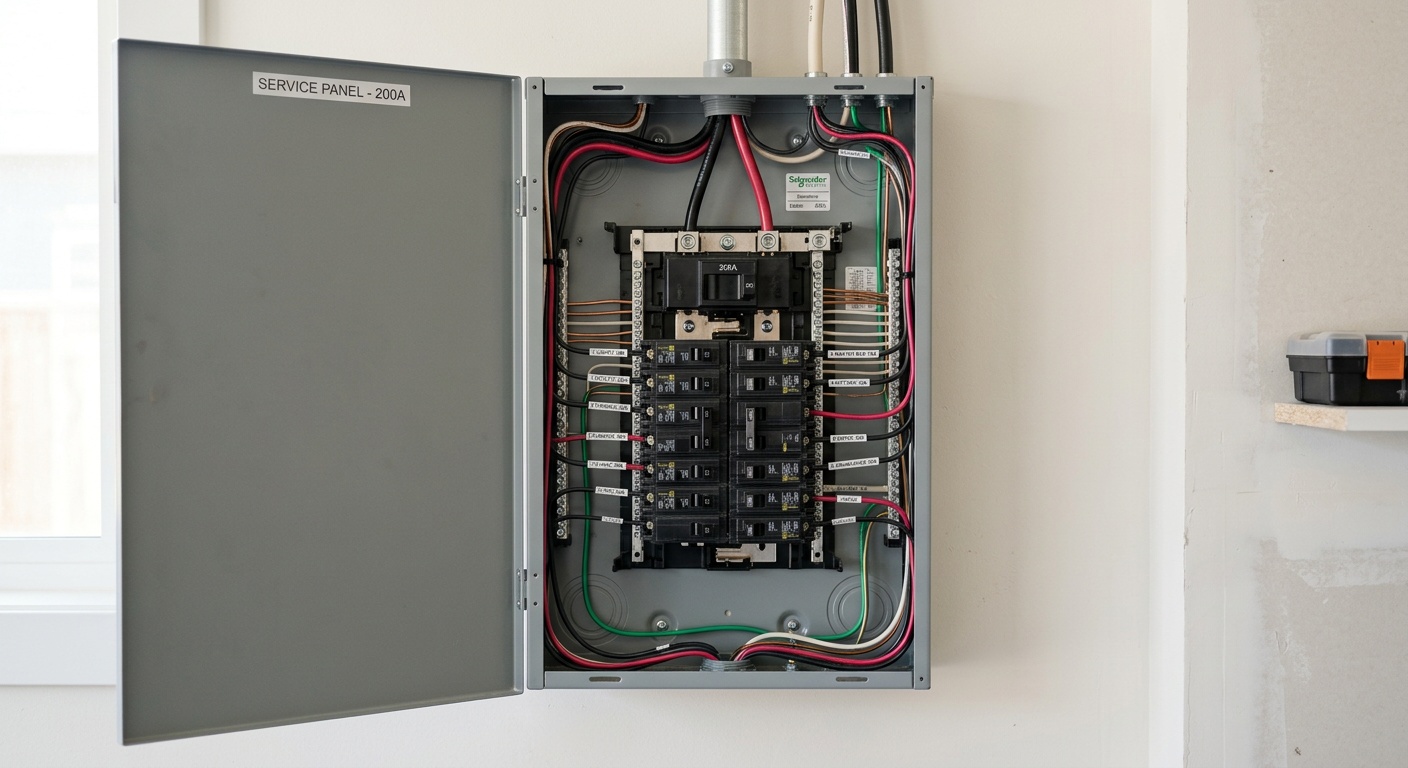
Think of your electrical panel as the mission control for every electron in your home. Typically located in a basement, garage, utility room, or hallway, the panel contains rows of circuit breakers, each controlling a specific circuit in the house.
Most homes built before 2000 were equipped with 100-amp service panels. By 2026, the standard for new construction is 200-amp service, and homes integrating EV charging, solar systems, heat pumps, and smart home infrastructure increasingly require 400-amp service or sub-panels to handle the load.
What to Look For in Your Panel
Labeling: Every breaker should be clearly labeled (e.g., “Kitchen Small Appliance 1,” “Master Bedroom,” “HVAC”). If yours isn’t, spend an afternoon mapping circuits — it’s one of the most valuable home maintenance tasks you can do.
Breaker condition: Breakers should sit firmly in the ON or OFF position. A breaker that keeps tripping is telling you something — either the circuit is overloaded, there’s a short circuit, or the breaker itself is failing.
Panel brand warnings: Certain legacy panels from brands like Federal Pacific and Zinsco have been associated with elevated fire risk. If your home has one of these, a licensed electrician should evaluate it promptly. According to the Electrical Safety Foundation International (ESFI), “Faulty electrical panels are a contributing factor in an estimated 51,000 home fires annually in the United States.”
Real-world example: A homeowner in Portland, Oregon purchased a 1978 ranch-style home in late 2024. After moving in, they noticed frequent tripping on their kitchen circuit. An inspection revealed the original 100-amp Federal Pacific panel with severely degraded breakers. Upgrading to a 200-amp panel with AFCI breakers in early 2025 cost approximately $3,200 — but their home insurance premium dropped by $340/year, paying back the investment within a decade while dramatically reducing fire risk.
Kitchen: The Highest-Demand Room in Your Home
The kitchen is the electrical heavyweight of any home. Refrigerators, microwaves, dishwashers, electric ranges, coffee makers, and now smart appliances — all competing for power in a relatively small space.
The NEC 2026 requires kitchens to have a minimum of two 20-amp small appliance circuits serving countertop outlets, in addition to dedicated circuits for the refrigerator, dishwasher, garbage disposal, and any electric range or oven.
Kitchen Circuit Breakdown
Refrigerator: Should be on its own 20-amp dedicated circuit. Modern smart refrigerators with built-in screens and IoT connectivity draw more power than older models and should not share a circuit with other appliances.
Electric Range/Oven: Requires a 240V, 50-amp dedicated circuit. This is non-negotiable — attempting to run a range on a standard 120V circuit is a fire hazard.
Microwave: Built-in or over-the-range microwaves need their own 20-amp, 120V dedicated circuit. Countertop models can share a small appliance circuit but shouldn’t be used simultaneously with other high-draw appliances like toasters or electric kettles.
Dishwasher: Needs a dedicated 20-amp circuit. Many newer models, especially those with heated drying and Wi-Fi connectivity, draw close to the full 20-amp limit during operation.
GFCI Protection: All kitchen countertop outlets within 6 feet of a sink must be GFCI protected. Under 2026 NEC updates, this protection extends to all kitchen receptacles, regardless of proximity to water.
Pro Tip: If you’re planning a kitchen remodel in 2026, consider running a dedicated 20-amp circuit for your coffee station — especially if you’re running an espresso machine, grinder, and warming plate simultaneously. It’s a small investment that prevents constant tripping and appliance damage.
Bathroom: Safety First in Wet Environments
Water and electricity are a dangerous combination. Bathroom electrical requirements are among the strictest in residential codes — and for good reason. The ESFI reports that approximately 200 Americans are electrocuted in bathtub or shower accidents each year, with improper electrical installations being a significant contributing factor.
Every bathroom outlet must be GFCI protected. In fact, a single GFCI outlet can protect multiple downstream outlets on the same circuit — though for maximum safety, individual GFCI outlets at each location is preferred.
Bathroom Electrical Requirements
- At least one 20-amp circuit dedicated to bathroom receptacles (this circuit can serve multiple bathrooms but cannot serve outlets outside the bathroom).
- Exhaust fan: Must be on a circuit separate from the bathroom lighting in many configurations. If your fan and light are on the same switch, they’re typically on the same circuit — which is acceptable but limits flexibility.
- Heated floors: Electric radiant heating under bathroom tiles requires a dedicated circuit, typically 240V for larger bathrooms. This is a growing upgrade in 2026 new construction.
- No outlets inside shower or tub areas: Outlets must maintain specific distance clearances from water sources as defined by local codes.
- Lighting fixtures above tubs or showers: Must be specifically rated for wet or damp locations.
Case Study: A couple renovating their master bathroom in Austin, Texas in 2025 added a steam shower, electric heated floor, and a towel warming rack. Their electrician installed a dedicated 240V/30-amp circuit for the steam generator, a separate 20-amp circuit for the heated floor thermostat, and a third circuit for the towel warmer — in addition to the existing GFCI bathroom circuit. Total electrical upgrade cost: $1,800. The result was a spa-quality bathroom with zero safety compromises.
Living Room and Bedroom: Comfort, Entertainment, and Smart Tech
Living rooms and bedrooms might seem electrically simple compared to kitchens and bathrooms, but in 2026, these spaces have evolved significantly. Home theaters, gaming setups, smart lighting systems, motorized shades, and whole-home audio demand more thoughtful electrical planning than ever.
Standard living room and bedroom circuits are typically 15-amp, 120V circuits. The NEC requires receptacle outlets to be spaced so that no point along the wall is more than 6 feet from an outlet — meaning rooms should have outlets roughly every 12 feet along the wall perimeter.
Smart Home Integration Considerations
By 2026, approximately 68% of newly constructed homes in the United States include some form of smart home wiring infrastructure, according to the Consumer Technology Association. This includes structured wiring for smart lighting, in-wall USB charging ports, smart outlet hubs, and low-voltage data wiring running alongside electrical circuits.
Key considerations for living rooms and bedrooms:
- Entertainment center circuits: A large 4K OLED TV, AV receiver, gaming console, and streaming devices can collectively draw 800–1,200 watts. Consider a dedicated 20-amp circuit for your entertainment wall to avoid sharing with lamps and other devices.
- USB-A and USB-C outlets: 2026 NEC-compliant homes increasingly feature combination receptacles with integrated USB-C ports rated at 45W or higher — perfect for phones, tablets, and small laptops without a wall brick.
- Arc fault protection: The NEC 2026 mandates AFCI protection in bedrooms, living rooms, dining rooms, and virtually all habitable spaces. AFCI breakers detect the subtle electrical arcing that occurs in damaged wires inside walls — a leading cause of bedroom fires from old wiring or pinched cords.
- Ceiling fan/light combos: Should be on a switched circuit. If you want independent control of the fan and light without a smart controller, you’ll need a 3-wire circuit run to the ceiling box.
Garage, Laundry Room, and Outdoor Spaces
These three areas represent the frontier of modern residential electrical demands — particularly as EV adoption accelerates and outdoor living spaces become more elaborate.
Garage Electrical: The EV Charging Revolution
In 2026, electric vehicles represent 34% of new passenger vehicle sales in the United States (per the International Energy Agency’s 2026 Outlook). This means garage electrical planning has fundamentally changed. Most Level 2 home EV chargers require a 240V, 50-amp dedicated circuit — a significant electrical addition for many older homes.
Beyond EV charging, garages need:
- GFCI-protected outlets on all receptacles
- At least one 20-amp circuit for general use (power tools, compressors)
- Adequate lighting circuits — often 15-amp with LED shop lights
- Sub-panel if the garage is detached and requires substantial power
Pro Tip: When installing an EV charger circuit in 2026, ask your electrician to run conduit and a 60-amp circuit even if your current charger only needs 50 amps. Future EV models with faster onboard chargers may demand more capacity, and upgrading the breaker is far cheaper than running new wire later.
Laundry Room Requirements
The laundry room requires careful circuit planning for both the washer and dryer:
- Washing machine: 20-amp, 120V dedicated circuit with a GFCI outlet (required by 2026 NEC in laundry areas).
- Electric dryer: 240V, 30-amp dedicated circuit with a 4-prong outlet (3-prong outlets are grandfathered in existing installations but not permitted in new work).
- Gas dryer: Still needs a 120V, 20-amp circuit for the motor, controls, and igniter.
Outdoor Electrical
All outdoor outlets must be GFCI protected and installed in weatherproof, in-use covers. Outdoor circuits for pools, hot tubs, and landscape lighting have specific setback and bonding requirements that vary by jurisdiction. Always pull permits for outdoor electrical work — this is one area where DIY can create serious liability and insurance issues.
Common Electrical Challenges and How to Solve Them
Let’s address the problems that bring most homeowners to search “electrical problem” at 10pm on a weekday.
Challenge 1: Constantly Tripping Breakers
The most common culprit is circuit overload — too many devices drawing power simultaneously on a single circuit. The solution isn’t simply resetting the breaker repeatedly; that risks overheating the wiring. Assess what’s on the circuit, redistribute loads, and consider having an electrician add a dedicated circuit for high-draw appliances. If a breaker trips with minimal load, the breaker itself may be failing and should be replaced by a licensed electrician.
Challenge 2: Outdated Wiring
Homes built between the 1950s and 1970s may contain aluminum branch circuit wiring, which expands and contracts differently than copper, leading to loose connections and fire risk. Homes from the same era may also have two-prong ungrounded outlets throughout. Both situations require professional evaluation. Rewiring an entire home is expensive ($8,000–$20,000 depending on size), but partial solutions like installing GFCI outlets in place of two-prong outlets provide meaningful safety improvements at lower cost.
Challenge 3: Insufficient Capacity for Modern Demands
A 100-amp service panel simply cannot safely support a modern home with an EV charger, heat pump, electric range, and smart home systems running simultaneously. A panel upgrade to 200 or 400 amps typically costs $2,500–$6,000 in 2026, depending on utility connection complexity and local permit fees. Many utilities now offer rebate programs specifically for panel upgrades to support EV adoption — check your local utility’s 2026 incentive offerings before paying full price.
Energy Load Comparison by Room
How does electrical demand break down across your home? Here’s a visualization of average peak electrical load by room in a typical 2,200 sq ft American home in 2026:
Average Peak Electrical Load by Room (% of Total Home Load)
*Estimates based on average household usage data; EV charging assumed as nightly 40-amp charge. Source: U.S. EIA 2026 Residential Energy Consumption Survey projections.
Room-by-Room Electrical Requirements at a Glance
| Room | Min. Circuit Size | Safety Device Required | Key Dedicated Circuits | 2026 Update |
|---|---|---|---|---|
| Kitchen | 20A (small appliance) | GFCI all outlets | Range, refrigerator, dishwasher | GFCI required on all kitchen receptacles |
| Bathroom | 20A dedicated | GFCI all outlets | Heated floor, steam shower | Expanded wet location lighting rules |
| Living/Bedroom | 15A general | AFCI breakers | Entertainment center (recommended) | AFCI now covers all habitable rooms |
| Garage | 20A general + 50A EV | GFCI all outlets | EV charger (240V/50A) | EV-ready circuits in new construction |
| Laundry Room | 20A washer + 30A dryer | GFCI washer outlet | Washer, electric dryer | GFCI now required for laundry receptacles |
Frequently Asked Questions
How do I know if my home’s electrical system needs an upgrade?
There are several clear signals: your breakers trip regularly under normal loads; you have a 100-amp panel and are adding an EV charger, heat pump, or major appliance; you have two-prong (ungrounded) outlets throughout the home; your wiring is aluminum branch circuit or knob-and-tube; or your panel brand is Federal Pacific or Zinsco. Any one of these warrants a consultation with a licensed electrician. In 2026, many utilities and state energy offices offer free electrical assessments as part of EV-readiness and electrification programs — take advantage of these resources before spending money on a private inspection.
Can I do my own electrical work, or do I always need a licensed electrician?
This depends heavily on your jurisdiction. In many U.S. states and Canadian provinces, homeowners are permitted to do their own electrical work on their primary residence, provided they pull the required permits and pass inspection. Simple tasks like replacing an outlet, installing a ceiling fan on an existing circuit, or swapping a standard breaker for a GFCI breaker are within reach for a careful DIYer. However, any work involving the main panel, new circuits, service upgrades, or 240V wiring should always be handled by a licensed electrician. The permit-and-inspection process exists to protect you — an uninspected DIY wiring job can void your homeowner’s insurance and create serious liability in a sale.
What’s the difference between a GFCI and an AFCI, and do I need both?
A GFCI (Ground Fault Circuit Interrupter) protects against electric shock by detecting current leaking to ground — critically important near water sources. A AFCI (Arc Fault Circuit Interrupter) protects against electrical fires by detecting the erratic current signatures of arcing within walls — caused by damaged, pinched, or aging wiring. They protect against different hazards and are required in different locations. Under the NEC 2026, GFCIs are required in kitchens, bathrooms, garages, outdoor spaces, laundry rooms, and unfinished basements. AFCIs are required in virtually all habitable rooms including bedrooms, living rooms, dining rooms, and hallways. In some locations — like a finished basement or kitchen — combination AFCI/GFCI breakers satisfy both requirements simultaneously. When in doubt, a combination breaker is the safest and most future-proof choice.
Power Up Your Home: Your Action Plan
You’ve now got a room-by-room map of your home’s electrical DNA. The question isn’t whether to engage with this knowledge — it’s how quickly you can turn it into action. Electrical awareness isn’t just about safety; in 2026, it’s directly connected to your energy costs, EV readiness, smart home performance, and home resale value.
Here’s your practical roadmap:
- Audit your panel this week. Find your electrical panel, check that every breaker is labeled, and note the total service amperage. If it’s 100 amps or unbranded, call an electrician for an evaluation.
- Walk through each room with this guide. Identify any two-prong outlets, missing GFCI protection near water, and rooms without AFCI breakers. Prioritize bathrooms and kitchens first.
- Check your utility’s 2026 incentive programs. Many now offer rebates for panel upgrades, AFCI installation, and EV-ready circuit additions. Free money is available — but you have to look for it.
- Plan for EV charging infrastructure now — even if you don’t own an EV yet. Running a 60-amp conduit to your garage during the next electrical project costs very little extra and future-proofs your home significantly.
- Schedule a licensed electrical inspection if your home is more than 25 years old and hasn’t had one. Think of it like a physical for your house. The ESFI recommends electrical inspections every 10 years for homes over 40 years old.
The broader trend is clear: homes are becoming electric. Heat pumps are replacing gas furnaces, induction cooktops are replacing gas ranges, and EVs are replacing gasoline vehicles — all landing load on your home’s electrical system. The homeowners who proactively understand and upgrade their systems in 2026 will be ahead of the curve on energy costs, safety, and market value.
Here’s the question worth sitting with: if your home’s electrical system failed an inspection today, would you know why — and would you know exactly what to do about it? With the knowledge in this guide, the answer should now be a confident yes.