Whole Home Electrical Panel Upgrade Cost Guide for 2026
Reading time: 14 minutes
Your lights flicker during a summer storm. Your circuit breaker trips every time someone runs the microwave and the hair dryer simultaneously. Your EV charger installation quote comes back with a gut-punch caveat: “Your panel needs to be upgraded first.” Sound familiar?
You’re not imagining it — and you’re definitely not alone. In 2026, whole-home electrical panel upgrades have become one of the most requested home improvement projects across the United States, driven by the EV revolution, smart home technology adoption, and the nationwide push toward electrification. According to the National Electrical Contractors Association (NECA), panel upgrade requests surged by 34% between 2023 and 2025, and that trajectory shows no signs of slowing.
But here’s the straight talk: navigating electrical panel upgrade costs isn’t just about comparing quotes. It’s about understanding what you’re paying for, when it’s truly necessary, and how to avoid the common traps that turn a $3,000 project into a $12,000 nightmare.
This guide gives you the complete picture — costs, timelines, red flags, and real-world scenarios — so you can make a confident, informed decision.
Table of Contents
- Why Electrical Panel Upgrades Are Surging in 2026
- The Real Cost Breakdown: What You’ll Actually Pay
- Key Factors That Drive Your Final Price
- Panel Size Comparison: 100A vs. 200A vs. 400A
- Average Upgrade Costs by Project Type
- Real-World Scenarios: Three Homeowner Stories
- Common Challenges and How to Overcome Them
- Hiring the Right Electrician: What to Look For
- Frequently Asked Questions
- Your Upgrade Roadmap: Next Steps
Why Electrical Panel Upgrades Are Surging in 2026
The average American home built before 2000 was designed around a very different lifestyle. Think two televisions, a desktop computer, and a gas stove. Fast-forward to 2026, and that same home is now expected to power Level 2 EV chargers, heat pump water heaters, induction ranges, solar inverters, battery storage systems, and a constellation of smart devices that never truly power down.
The math simply doesn’t work anymore on older 100-amp panels. According to a 2025 Lawrence Berkeley National Laboratory study, fully electrifying a home — replacing gas appliances and adding an EV charger — can increase peak electrical demand by 60–80%. That’s not a panel tweak. That’s a fundamental infrastructure overhaul.
The Electrification Mandate Effect
Beyond personal lifestyle choices, regulatory pressure is accelerating upgrades. As of 2026, 16 states have enacted or are phasing in building codes that require new construction and major renovations to be all-electric-ready. California, New York, and Massachusetts have gone further, offering direct rebates under the Inflation Reduction Act’s (IRA) provisions for panel upgrades tied to electrification projects — up to $4,000 per household in qualifying circumstances.
This policy landscape means that even homeowners who weren’t planning a panel upgrade are suddenly finding it’s either required, incentivized, or both. Understanding the full cost picture has never been more important.
Safety: The Unignorable Driver
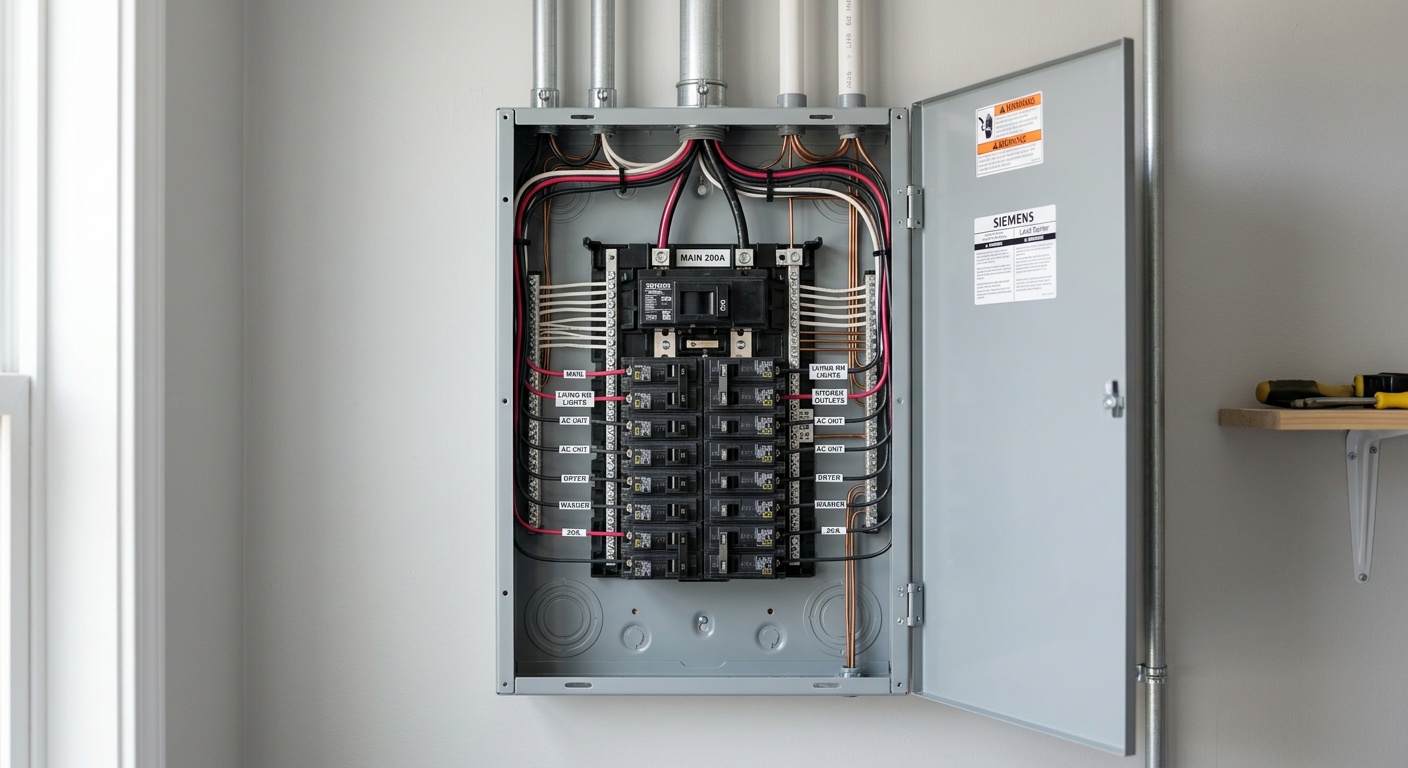
Let’s not bury the safety angle. The U.S. Fire Administration estimates that approximately 51,000 home electrical fires occur annually, with outdated or overloaded panels being a leading contributing factor. If your home still has a Federal Pacific Electric (FPE) Stab-Lok panel or a Zinsco/Sylvania panel — both of which have documented safety defects — an upgrade isn’t optional. It’s urgent. Insurance companies are increasingly refusing to cover homes with these panels, or charging significantly higher premiums.
The Real Cost Breakdown: What You’ll Actually Pay
Here’s where most guides fail you — they give you a range so wide it’s practically useless. “Between $1,500 and $10,000” doesn’t help you budget. Let’s be more precise.
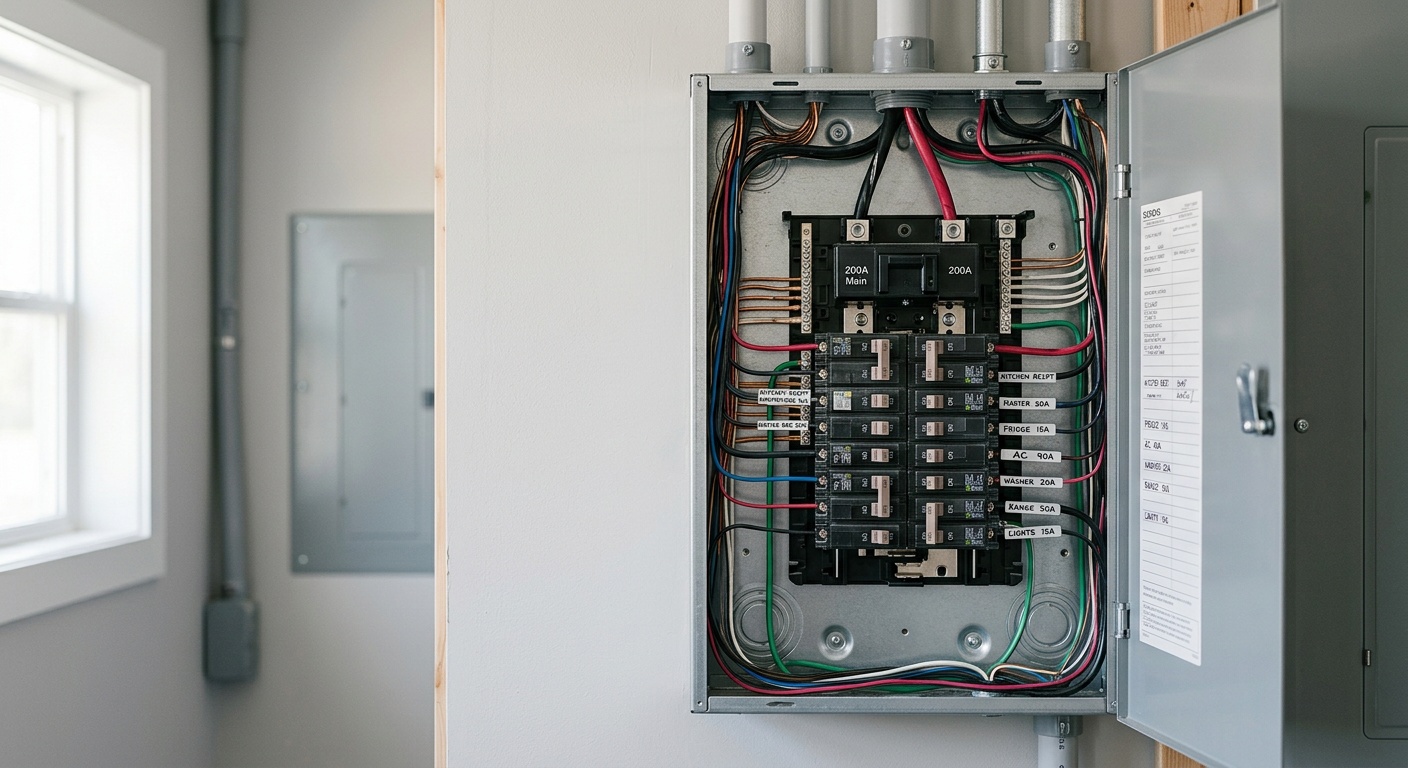
In 2026, the national average cost for a whole-home electrical panel upgrade sits at approximately $3,800 to $5,500 for a standard 200-amp service upgrade in a single-family home. However, that number shifts dramatically based on scope, location, and complexity. Here’s how the cost layers break down:
- New electrical panel (materials only): $300 – $800 for a quality 200A panel from brands like Square D, Eaton, or Siemens
- Labor costs: $1,200 – $3,000 depending on region and project complexity
- Permit fees: $100 – $500 depending on municipality
- Utility coordination (meter upgrade/service drop): $500 – $2,500 if the utility company needs to upgrade service to your home
- Subpanel additions: $500 – $1,500 per subpanel if needed for outbuildings or large additions
- Grounding and bonding upgrades: $200 – $600 if current grounding system doesn’t meet 2026 NEC code
Pro Tip: Always ask your electrician for an itemized quote. A lump-sum quote of “$4,500 installed” tells you almost nothing about where the money is going or where there might be room to adjust scope.
Regional Price Variation: It Matters More Than You Think
Geography plays a surprisingly large role. Labor markets, utility regulations, and local permitting complexity create significant price differences. In San Francisco or Manhattan, a 200-amp upgrade can easily run $7,000 – $10,000. In rural Tennessee or Arkansas, that same job might come in at $2,200 – $3,000. The Midwest and Southeast generally offer the most competitive pricing, while coastal metros and mountain resort communities command premiums.
A useful benchmark: Licensed electricians in 2026 charge between $75 and $175 per hour nationally, with high-cost-of-living cities pushing rates above $200/hour for residential work.
Key Factors That Drive Your Final Price
Think of electrical panel pricing like an iceberg. The visible cost is just the top. Here are the hidden factors that most homeowners don’t anticipate:
1. Your Current Service Amperage
Upgrading from a 60-amp to 200-amp service is significantly more complex and expensive than upgrading from 100-amp to 200-amp. Older homes (pre-1960s especially) with 60-amp service may require new service entrance cable, a new meter base, and utility company involvement — adding $1,500 – $3,000 to the project cost.
2. Panel Location and Accessibility
A panel in a finished basement, inside a wall, or in a tight utility closet costs more to replace than one in an open, accessible garage. Electricians may need to run new conduit, patch drywall, or coordinate additional trades. Budget an extra $300 – $800 for difficult access situations.
3. The Need for a 400-Amp Service Upgrade
For homes with EV charging, whole-home battery backup (like the Tesla Powerwall 3 or Enphase IQ Battery), and full electrification, a 400-amp service may be necessary. This is a much larger undertaking: expect costs of $8,000 – $15,000 or more, especially when it involves trenching for underground service or significant utility work.
4. Code Compliance Requirements
Most jurisdictions in 2026 now enforce the 2023 National Electrical Code (NEC), and some are already adopting the 2026 NEC updates. Code upgrades often require arc-fault circuit interrupters (AFCIs), ground-fault circuit interrupters (GFCIs), and tamper-resistant receptacles in specified locations. If your home is significantly out of code, these corrections can add $500 – $2,000 to your project.
5. Emergency vs. Planned Upgrade
If your panel has failed or poses an immediate safety risk, you’re negotiating from a position of urgency — and contractors know it. A planned, non-emergency upgrade typically saves homeowners 15–25% compared to emergency calls, especially if you schedule the project during a contractor’s slower season (typically January–March in most of the US).
Panel Size Comparison: 100A vs. 200A vs. 400A
| Panel Size | Best For | Avg. Install Cost (2026) | EV Charger Ready? | Future-Proof Rating |
|---|---|---|---|---|
| 100-Amp | Small homes, basic appliances, no EV | $1,800 – $2,800 | Limited (Level 1 only) | ⭐⭐ (Low) |
| 200-Amp | Most homes, 1-2 EVs, moderate electrification | $3,500 – $5,500 | Yes (Level 2) | ⭐⭐⭐⭐ (Good) |
| 320-Amp (Dual 200A) | Large homes, home businesses, solar+storage | $6,000 – $9,000 | Yes (Multiple) | ⭐⭐⭐⭐⭐ (Excellent) |
| 400-Amp | Large estates, full electrification, commercial-adjacent | $8,000 – $15,000+ | Yes (Multiple, Fast) | ⭐⭐⭐⭐⭐ (Maximum) |
Average Upgrade Costs by Project Type
The chart below illustrates average total project costs across the most common panel upgrade scenarios homeowners face in 2026:
$4,200 avg.
$2,400 avg.
$11,500 avg.
$5,800 avg.
$6,500 avg.
* National averages for 2026. Costs vary significantly by region, home configuration, and contractor.
Real-World Scenarios: Three Homeowner Stories
Abstract numbers only go so far. Here’s how three different homeowners navigated panel upgrades in 2025–2026, and what you can learn from their experiences.
Scenario 1: The EV-Triggered Upgrade in Phoenix, Arizona
Marcus and Diane bought a 1987 ranch-style home in Phoenix with a 100-amp panel. When they purchased a Ford F-150 Lightning in late 2025, their electrician informed them the panel couldn’t safely support a Level 2 charger alongside their existing central A/C system. They needed a 200-amp upgrade.
Total cost: $5,100 — which included the panel upgrade, a dedicated 50-amp circuit for the EV charger, and a new outdoor subpanel for their detached garage. They qualified for a $600 Arizona utility rebate and a partial federal tax credit, bringing their out-of-pocket cost to approximately $4,200. The project took one full day plus a half-day for the utility company to complete the meter upgrade.
Key lesson: Bundling the EV charger installation with the panel upgrade saved Marcus and Diane roughly $800 in labor compared to doing them as separate projects.
Scenario 2: The Safety-Driven Emergency Upgrade in Chicago, Illinois
Patricia, a retired teacher in Chicago’s Logan Square neighborhood, had her home insurance renewal rejected in 2025 because her 1970s-era Federal Pacific Stab-Lok panel was flagged in her home inspection. She had 45 days to upgrade or lose coverage entirely.
The urgency worked against her on price — two of three contractors quoted above-market rates knowing her timeline. She ultimately found a licensed electrician through the Illinois Electrical Contractors Association who charged a fair $4,800 for a 200-amp upgrade with full code compliance including AFCI breakers throughout the home. Her homeowner’s insurance premium dropped by $340 annually after the upgrade.
Key lesson: Urgency is expensive. If you know you have a problematic panel, schedule the upgrade proactively — before your insurance company forces the issue.
Scenario 3: The Whole-Home Electrification Project in Portland, Oregon
The Chen family in Portland undertook a comprehensive electrification project in early 2026: replacing their gas furnace with a heat pump, installing a heat pump water heater, adding rooftop solar, and preparing for two EVs. This required a full 400-amp service upgrade.
Their total electrical infrastructure cost: $13,200, including trenching for new underground service, a new 400-amp meter base, two 200-amp panels (one main, one for the solar/battery system), and all required permits. After applying Oregon’s energy efficiency incentives and the federal IRA 25C tax credit, their net cost was approximately $9,100.
Key lesson: For comprehensive electrification projects, the electrical infrastructure is a foundational investment — and stacking available incentives can meaningfully reduce the net cost.
Common Challenges and How to Overcome Them
Challenge 1: The “Surprise” Utility Upgrade
Many homeowners are blindsided when their electrician tells them the utility company needs to upgrade the service drop — the wires running from the street pole to their home. This can add weeks to the timeline and $1,000 – $3,000 to the cost, depending on your utility provider.
How to overcome it: Ask your electrician upfront whether the service drop will need upgrading, and contact your utility’s residential department early in the planning process. In many areas, utility upgrades are free or subsidized if they’re part of a qualifying electrification project. Don’t wait for this surprise — proactively inquire.
Challenge 2: Permit Delays and Inspection Bottlenecks
In high-demand markets like Denver, Austin, and Seattle, building department permit queues have stretched to 4–8 weeks for electrical work in 2026. This can significantly delay your project, especially if you’re waiting on an EV charger for a new vehicle or a contractor has a narrow scheduling window.
How to overcome it: Ask your electrician whether they can pull the permit simultaneously with scheduling the work, and confirm they have experience with your specific municipality’s requirements. Some contractors have established relationships with local inspectors that can expedite the process. Additionally, expedited permit processing (for a fee of $100–$300) is available in many cities.
Challenge 3: Getting Accurate, Comparable Quotes
This is where homeowners lose thousands of dollars. Comparing a quote that includes permit fees, utility coordination, AFCI breakers, and all labor to a quote that includes only the panel and basic installation is an apples-to-oranges mistake.
How to overcome it: Use a standardized request format when soliciting quotes. Ask each contractor to provide a line-item quote that specifies: panel brand and amperage, number of circuits, permit fees (included or not), utility coordination costs, code compliance upgrades required, and warranty terms. Only then can you make a meaningful comparison.
Hiring the Right Electrician: What to Look For
Your panel is the heart of your home’s electrical system. This is not the place to cut corners with the cheapest bid or an unlicensed contractor.
- Verify licensing: In all 50 states, electrical panel work requires a licensed master electrician or a journeyman working under one. Verify license status through your state’s contractor licensing board website — a quick search that takes two minutes.
- Check insurance: General liability (minimum $1M) and workers’ compensation coverage are non-negotiable. Ask for certificates of insurance, not just verbal confirmation.
- Look for NEC familiarity: Ask directly: “Are you familiar with the 2023 NEC requirements?” and “Is your jurisdiction adopting any 2026 NEC updates I should know about?” A knowledgeable answer signals professional currency.
- Review recent panel upgrade reviews specifically: General electrician reviews may reflect repair work or lighting installations. Seek out reviews specifically mentioning panel upgrades or service upgrades.
- Ask about manufacturer preferences: Quality electricians have strong opinions about panel brands. In 2026, Square D QO, Eaton BR, and Siemens ES series panels are considered industry-standard quality. Be cautious of contractors pushing unfamiliar or bargain-brand panels.
Expert quote worth noting: As master electrician and NECA instructor Robert Wiesberg stated in a 2025 industry webinar: “The panel you install today needs to serve your home for 30–40 years. The $400 you save on a budget panel is the most expensive decision you’ll ever make at $10 per year of regret.”
Frequently Asked Questions
How long does a whole-home electrical panel upgrade take to complete?
A standard 200-amp panel upgrade typically takes one full working day for the electrician — usually 6–9 hours. However, the total project timeline from quote to completed inspection often runs 2–4 weeks when you factor in permit approval and scheduling. More complex upgrades (400-amp, utility coordination required) can extend to 4–8 weeks in busy markets. Plan accordingly and never schedule a panel upgrade the week before a major life event that depends on your home being fully operational.
Will my power be off during the panel upgrade?
Yes — your home will be without power for the majority of the workday during a panel upgrade. Your electrician will coordinate with the utility company to disconnect service at the meter before work begins and reconnect after the installation passes inspection. Most homeowners plan accordingly by working offsite, staying elsewhere, or scheduling the project during mild weather when heating and cooling are less critical. The utility reconnection window is typically within a few hours of completion, but in some municipalities, a formal inspection must occur before reconnection — which can push the power restoration to the following day.
Are there rebates or tax credits available for electrical panel upgrades in 2026?
Yes — and they can be substantial. Under the Inflation Reduction Act provisions still active in 2026, homeowners upgrading their panel in connection with qualifying electrification projects (heat pumps, heat pump water heaters, EV charging) may qualify for the 25C Energy Efficient Home Improvement Credit of up to $600 for the panel upgrade specifically, and up to $2,000 combined annually. State and utility rebates layer on top of this. The HOMES Rebate Program, administered through state energy offices, offers additional rebates in participating states. Visit your state energy office website or use the Database of State Incentives for Renewables and Efficiency (DSIRE) at dsireusa.org to identify your specific eligibility.
Your Upgrade Roadmap: Powering the Decision Forward
Here’s the thing about electrical panel upgrades: they’re one of those rare home investments where doing it right the first time, and doing it now rather than later, almost always pays off. The question isn’t really if you’ll need to upgrade — it’s whether you’ll do it on your terms or under duress.
Here’s your practical action roadmap:
- Assess your current panel immediately. Find your panel, note the brand and amperage rating, and check for warning signs: FPE or Zinsco branding, signs of rust or scorch marks, breakers that don’t reset cleanly, or a panel that’s completely full with no open slots.
- Define your 5-year electrical needs. Are you buying an EV? Planning solar? Installing a hot tub or workshop? Your upgrade size should accommodate not just today’s needs but tomorrow’s. Upgrading to 200-amp now and then needing 400-amp in three years is the most expensive path.
- Research your incentives before getting quotes. Check DSIRE, your state energy office, and your utility company’s rebate portal. Knowing your rebate eligibility changes your budget math and your conversations with contractors.
- Get three itemized quotes from licensed master electricians. Use the standardized format described in the challenges section above. Don’t choose the lowest bid automatically — choose the combination of value, professionalism, and trust.
- Schedule strategically. January through March is typically slower for electricians in most US regions, which means better availability, sometimes better pricing, and faster permit turnaround. If your timeline is flexible, consider the off-season advantage.
The broader implication here is significant: as the US grid modernizes and home electrification becomes the norm rather than the exception, your electrical panel is transforming from a background utility into a strategic home asset. The homes with modern, high-capacity electrical infrastructure will command premium resale values and lower long-term energy costs through optimized electrification.
You’re not just upgrading a panel. You’re future-proofing the most important investment you own.
What would it mean for your household if you never had to worry about capacity constraints again? That answer — whatever it is — is worth every dollar of a well-executed panel upgrade.