Best Time-of-Use Rate Strategies for Residential Electricity Savings
Reading time: 14 minutes
Your electricity bill arrives, and once again, you wonder: where is all this money going? If you’re like millions of American homeowners in 2026, you’re paying more than you need to — not because you use too much electricity, but because of when you use it. Time-of-Use (TOU) pricing has transformed from a niche utility experiment into one of the most powerful residential savings tools available today. The difference between a strategic TOU adopter and someone on a flat-rate plan can easily amount to $400–$900 per year in savings — sometimes more.
Here’s the honest truth: TOU rates reward smart behavior, but they punish passive habits. This guide is your practical roadmap for turning the complexity of peak and off-peak pricing into a genuine financial advantage — whether you’re a first-timer trying to understand your utility bill or an intermediate user looking to squeeze every dollar out of your solar panels, EV charger, and smart home devices.
Table of Contents
- What Is Time-of-Use Pricing and Why It Matters in 2026
- How TOU Rate Structures Actually Work
- Identifying Peak, Off-Peak, and Super Off-Peak Windows
- Top TOU Strategies for Maximum Residential Savings
- Real-World Case Studies: What’s Working in 2026
- Tools and Technology That Make TOU Optimization Effortless
- Common Challenges and How to Overcome Them
- TOU Plan Comparison: Choosing the Right Rate for Your Household
- Frequently Asked Questions
- Your TOU Savings Playbook: Activate It Today
What Is Time-of-Use Pricing and Why It Matters in 2026
Time-of-Use pricing is an electricity rate structure where the cost per kilowatt-hour (kWh) changes depending on the time of day, the day of the week, and sometimes the season. Instead of paying a flat rate of, say, $0.14/kWh regardless of when you run the dishwasher or charge your electric vehicle, TOU pricing creates distinct pricing tiers that reflect the real cost of generating and delivering electricity to the grid.
In 2026, TOU pricing is no longer optional for many households. According to the Edison Electric Institute’s 2025 annual report, over 47% of U.S. investor-owned utilities now offer some form of TOU plan, up from 31% in 2021. States like California, Illinois, New York, and Texas have aggressively expanded TOU enrollment programs, with California’s Public Utilities Commission mandating default TOU enrollment for residential customers across PG&E, SCE, and SDG&E service territories since 2024.
The underlying reason for this shift is straightforward: electricity grids experience massive demand swings throughout the day. When millions of households simultaneously run appliances after work — typically between 4 PM and 9 PM — grid operators must activate expensive “peaker plants” that burn natural gas at high cost. TOU pricing incentivizes consumers to redistribute that load, reducing strain on the grid, lowering carbon emissions, and passing savings back to consumers who cooperate.
“Time-of-Use pricing is the single most impactful tool we have for democratizing grid flexibility. When customers shift even 15% of their load to off-peak hours, the system-wide savings are enormous — and so are the individual bill reductions.” — Dr. Karen Liu, Senior Energy Policy Analyst, Rocky Mountain Institute, 2025
How TOU Rate Structures Actually Work
The Three Core Pricing Tiers
Most TOU plans segment the day into two or three pricing tiers. Understanding these tiers is the foundation of every savings strategy:
- Peak Hours: The highest-priced period, typically late afternoon through evening (often 4 PM–9 PM on weekdays). Prices can range from $0.35–$0.65/kWh in high-cost states like California in 2026.
- Off-Peak Hours: Lower-priced periods during overnight hours and weekends. Prices typically fall to $0.10–$0.18/kWh.
- Super Off-Peak / Mid-Peak: An intermediate or extra-low tier introduced by many utilities (especially in solar-heavy grids), often occurring midday when solar production peaks. Super off-peak rates can drop to as low as $0.06–$0.09/kWh in some California and Arizona markets.
Seasonal Variations That Change the Game
TOU pricing also has seasonal dimensions. Summer rates are almost universally higher during peak hours because air conditioning drives enormous afternoon electricity demand. Winter plans in northern states may have morning peak windows (6 AM–9 AM) when heating loads surge. Understanding your utility’s specific seasonal calendar — which you can always find in your rate tariff document or online account portal — can unlock an additional layer of savings.
For example, Pacific Gas & Electric’s E-TOU-C rate in 2026 charges approximately $0.52/kWh during summer peak hours versus just $0.31/kWh during off-peak periods — a spread of over $0.21/kWh. Running a 5-kWh load (like a pool pump for an hour) during peak versus off-peak hours costs $2.60 versus $1.55. Multiply that across a month of daily pool pump operation and you’re looking at a $32 monthly difference for a single appliance.
Identifying Peak, Off-Peak, and Super Off-Peak Windows
The first practical step in any TOU strategy is mapping out your utility’s specific pricing schedule. This sounds simple, but many households skip it — and then wonder why their bill didn’t drop after switching plans. Here’s how to do it right:
- Log into your utility’s online portal and download your current rate tariff document. Look for tables showing hourly prices by season.
- Check for holiday and weekend exceptions. Most utilities treat weekends and major federal holidays as off-peak, regardless of the hour. This is a significant savings window many people overlook.
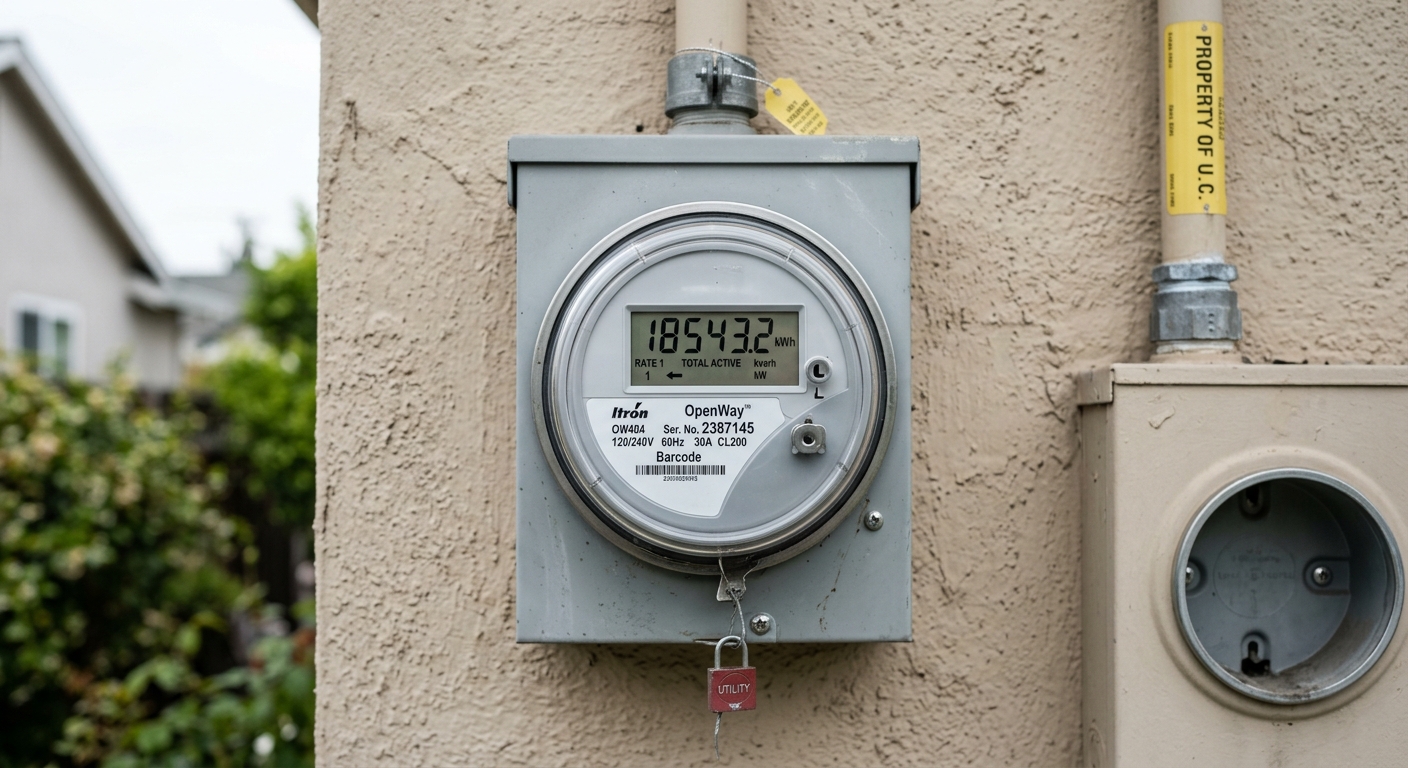
- Cross-reference with your own usage data. Most utility smart meters now provide hourly interval data accessible through your online account. Download a 30-day usage report and overlay it against your rate schedule.
- Note any “super off-peak” midday windows. If your utility has them, this is prime time for running high-draw appliances — especially if you have solar panels generating excess energy anyway.
A quick scenario to illustrate: Imagine you’re a family of four in Phoenix, Arizona, with a 3-ton air conditioner, two EVs, and a pool. Your utility, Arizona Public Service (APS), offers a TOU plan with peak hours from 3 PM–8 PM on weekdays. By simply pre-cooling your home to 72°F by 2:45 PM and letting the thermostat rise to 79°F during peak hours before resuming normal operation at 8 PM, you could eliminate most of your AC’s peak-hour runtime. Combine that with overnight EV charging, and you’re looking at potential savings of $70–$120 per month during summer billing cycles.
Top TOU Strategies for Maximum Residential Savings
Strategy 1: Shift High-Draw Appliances to Off-Peak Windows
The most foundational TOU strategy is appliance shifting — deliberately rescheduling energy-intensive tasks to off-peak or super off-peak hours. The appliances that deliver the biggest bang-for-buck when shifted are:
- Clothes washers and dryers (average 3–5 kWh per cycle): Schedule laundry for after 9 PM or on weekend mornings.
- Dishwashers (1.2–1.8 kWh per cycle): Use the delayed start feature to run overnight.
- Electric water heaters (3–5 kWh per heating cycle): Program a timer to heat water between midnight and 6 AM.
- Pool and spa pumps (1–3 kWh/hour): Shift filtration cycles to overnight or weekend windows.
- Electric vehicle charging (8–15 kWh per session): Absolutely the highest-impact shift available to EV owners.
Strategy 2: EV Charging Optimization — The Single Biggest Win
If your household owns an electric vehicle, TOU optimization is practically mandatory. The numbers are staggering. A Tesla Model 3 with a 75 kWh battery, fully charged from 20% to 100% (consuming roughly 60 kWh), costs:
- $31.20 at peak rates of $0.52/kWh
- $8.40 at super off-peak rates of $0.14/kWh
That’s a $22.80 difference per full charge. For a household charging three to four times per week, that’s over $270 per month in potential savings — or more than $3,200 annually. Every modern EV and Level 2 home charger supports scheduled charging. Set it, verify it, and don’t touch it.
Strategy 3: Smart Thermostat Pre-Conditioning
HVAC systems are typically the largest electricity consumers in a home, accounting for 40–50% of total usage in climate-heavy regions. The pre-conditioning strategy involves cooling or heating your home to a slightly more aggressive setpoint before peak hours begin, then allowing the temperature to drift during peak hours, and resuming normal operation after peak pricing ends.
In practical terms: if peak hours run 4 PM–9 PM, set your smart thermostat to reach your comfort temperature by 3:45 PM. A well-insulated home will maintain comfort for 1–2 hours with minimal compressor cycling. Nest, Ecobee, and Honeywell Home all offer native TOU integration in their 2026 firmware — many can automatically download your utility’s rate schedule and optimize autonomously.
Strategy 4: Battery Storage Arbitrage
For households with home battery systems (Tesla Powerwall, Enphase IQ Battery, Franklin Electric, or the rapidly growing number of competitors in 2026), TOU pricing creates a genuine arbitrage opportunity. Charge your battery during off-peak or super off-peak windows at $0.08–$0.14/kWh, then discharge it to power your home during peak hours instead of drawing from the grid at $0.45–$0.60/kWh.
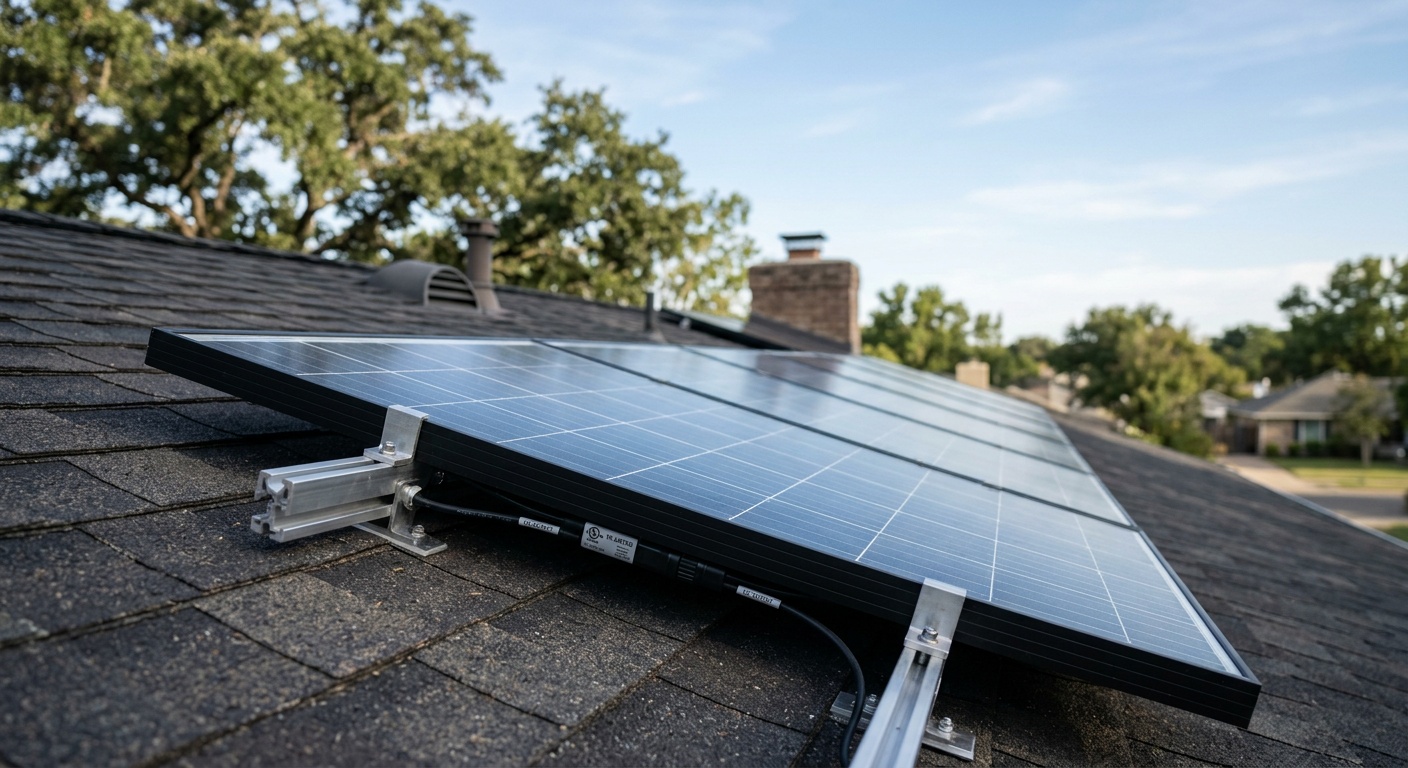
The math works beautifully at scale. A 10 kWh usable battery charged at $0.10/kWh and discharged during peak hours at $0.52/kWh saves approximately $4.20 per daily cycle in avoided grid costs — roughly $1,500 per year. With battery system costs dropping to an installed average of $8,500–$11,000 in 2026 (down from $14,000+ in 2021), payback timelines through TOU arbitrage alone are now approaching 6–8 years without solar, and 4–5 years when combined with solar net metering benefits.
Real-World Case Studies: What’s Working in 2026
Case Study 1: The Garcia Family, Sacramento, California
The Garcia family — two working parents, two teenagers — switched to PG&E’s E-TOU-D plan in early 2025 and spent the first month tracking their usage patterns through the utility’s app. They owned a Ford F-150 Lightning and had an older gas water heater they replaced with a heat pump water heater (HPWH) in mid-2025 as part of a California rebate program.
Their monthly bill before TOU enrollment averaged $287. After 12 months of deliberate optimization — overnight EV charging, HPWH programmed to run from midnight to 5 AM, smart thermostat pre-conditioning, and dishwasher delayed-start scheduling — their average monthly bill dropped to $161. That’s a $1,512 annual savings with no reduction in comfort or lifestyle.
The key insight from their experience: the F-150 Lightning’s 98 kWh battery was both their biggest risk (could have cost a fortune charged at peak rates) and their biggest opportunity (became a $90/month savings driver when charged off-peak).
Case Study 2: Retired Couple in Austin, Texas
David and Margaret, both retired and home most of the day in Austin, initially worried TOU pricing would hurt them — after all, they’re home during peak hours. Working with Austin Energy’s Value of Solar + TOU combination plan, they took a different approach: they installed a 7.2 kW rooftop solar system and a 13.5 kWh Powerwall in mid-2025, using solar generation to power daytime loads (including a chest freezer, office equipment, and the oven) while storing surplus energy to cover the 4 PM–9 PM peak window from battery.
Their net result: a 2026 average monthly electricity bill of just $34 — down from $218 pre-solar — with the Powerwall fully covering peak-hour demand on 23 out of 30 days in a typical summer month. Their total system cost was $28,000 before incentives and approximately $20,600 after federal tax credits and Austin Energy rebates, implying a payback period of roughly 11 years purely on bill savings, with significant value in resilience and emissions reductions beyond that.
Tools and Technology That Make TOU Optimization Effortless
The good news: you don’t have to manually track every appliance and check the clock. In 2026, the smart home ecosystem has matured dramatically around TOU optimization:
- Smart Thermostats with TOU Integration: Ecobee SmartThermostat Premium (2026 model) and Google Nest Learning Thermostat (7th gen) both support automatic TOU schedule downloads from 150+ U.S. utilities.
- Smart EV Chargers: ChargePoint Home Flex, Wallbox Pulsar Plus, and Tesla Wall Connector Gen 4 all feature TOU scheduling with utility API integration.
- Smart Plugs and Power Strips: Kasa EP25, Emporia Vue Smart Plug, and TP-Link Tapo P125M can be programmed to restrict power during peak windows for individual appliances.
- Home Energy Management Systems (HEMS): Platforms like Sense Home Energy Monitor, Emporia Energy App, and Span Smart Panel (rapidly growing in 2026) provide whole-home visibility and automated TOU optimization across all loads simultaneously.
- Utility Apps with AI Optimization: Many utilities, including Eversource, ComEd, and Duke Energy, have deployed AI-driven “bill projection” tools in their 2025–2026 app updates that simulate your projected bill under different TOU plans based on your actual usage history.
Pro Tip: Before investing in hardware, use your utility’s free online TOU comparison tool (most offer one as of 2026). Input 3–6 months of usage data and see your estimated savings under available TOU plans. The tool does the math — you just have to log in.
Common Challenges and How to Overcome Them
Challenge 1: Inflexible Household Schedules
The most common objection to TOU optimization: “I can’t shift my laundry to midnight — I work early, my kids have school, we can’t live on a rigid schedule.” This is a completely valid concern, and the answer isn’t to become a slave to the clock.
Solution: Focus first on appliances that can be automated without lifestyle disruption. The dishwasher, water heater, and EV charger alone — all set with timers and forgotten — can account for 35–60% of a household’s peak-hour reduction opportunity. You don’t need to shift everything. Even partial optimization yields meaningful savings. Automate the easy wins first, then reassess.
Challenge 2: Fear of Bill Spikes During Extreme Weather
A legitimate concern: what happens during a heat wave when you absolutely need to run the AC all afternoon and evening? TOU pricing can create unpleasant surprises during extreme weather events.
Solution: Most utilities offer “bill protection” provisions or TOU plan designs with peak-hour caps. Southern California Edison’s TOU-D-PRIME plan, for example, includes a monthly “bill protection” comparison feature that ensures you never pay more than 10% above what your bill would have been on a flat rate. Additionally, pairing TOU with a battery backup ensures you can always cover peak-hour loads from stored energy rather than the grid, even during extended heat events. If you’re in a high-risk climate zone without battery storage, model your worst-case summer month before committing to TOU.
Challenge 3: Complex Rate Structures That Are Hard to Understand
Some utility TOU plans layer tiered pricing (baseline allocations, above-baseline tiers) on top of time-of-use rates, creating rate structures that genuinely require a spreadsheet to decode. This complexity discourages enrollment and undermines the behavioral changes TOU is designed to encourage.
Solution: Request a “plain language summary” from your utility’s customer service team — many are now required by state regulations to provide one. Use third-party comparison platforms like WattBuy, PickMyEnergy, or OhmConnect to run side-by-side plan analyses. And don’t underestimate calling your utility directly: in 2026, most major utilities have dedicated TOU customer support lines with agents trained to walk you through plan selection based on your specific usage profile.
TOU Plan Comparison: Choosing the Right Rate for Your Household
Not all TOU plans are created equal. Here’s a comparison of the most common TOU plan structures available to residential customers in 2026:
| Plan Type | Peak Rate (est.) | Off-Peak Rate (est.) | Best For | Risk Level |
|---|---|---|---|---|
| Standard TOU (2-tier) | $0.38–$0.52/kWh | $0.13–$0.18/kWh | EV owners, flexible households | Moderate |
| TOU with Super Off-Peak (3-tier) | $0.45–$0.65/kWh | $0.07–$0.12/kWh | Solar + battery households, EV fleets | Higher (more savings potential) |
| TOU with Demand Charge | $0.20–$0.30/kWh + $7–$18/kW demand | $0.08–$0.13/kWh | Low-peak-draw households, battery storage users | High (complex) |
| Critical Peak Pricing (CPP-TOU) | $0.75–$1.50/kWh on CPP events | $0.10–$0.15/kWh | Highly flexible households with battery backup | Very High / Very High Reward |
| Real-Time Pricing (RTP) | Market-based (can exceed $1.00/kWh) | Can drop below $0.05/kWh | Tech-savvy users, automated smart homes | Highest |
For most residential customers in 2026, the Standard TOU (2-tier) or TOU with Super Off-Peak plan offers the best combination of savings potential and manageable risk. Reserve demand-charge and real-time pricing plans for households with automated home energy management systems that can react to price signals without human intervention.
Potential Savings by Strategy: At a Glance
The chart below illustrates estimated annual savings potential for common TOU optimization strategies in a typical 1,200 kWh/month household in a moderate-rate U.S. market (2026 estimates):
Estimated Annual Savings by TOU Strategy
$2,400–$3,600/yr
$1,200–$1,800/yr
$480–$720/yr
$180–$420/yr
$120–$300/yr
*Estimates based on 2026 average U.S. TOU rate spreads. Actual savings vary by utility, climate, and household profile.
Frequently Asked Questions
Is TOU pricing always better than a flat-rate plan?
Not necessarily — it depends entirely on your household’s flexibility and usage patterns. If you work from home, use significant electricity during traditional peak hours (typically 4 PM–9 PM), and have limited ability to shift loads (no EV, no smart appliances, renting without thermostat control), a flat-rate plan may actually cost less. The key is to model your specific usage data against available plan rates before switching. Most utilities offer free comparison tools in their customer portals in 2026, and switching back is generally straightforward if TOU doesn’t work for you.
How does TOU pricing interact with rooftop solar net metering?
TOU pricing and solar net metering can be a powerful combination — but the details matter enormously. If your utility credits solar exports at the same time-varying rates you pay for imports, exporting during peak hours earns you more credit per kWh than exporting during off-peak hours. This is called “export rate matching” and is offered by utilities like NV Energy and some California IOUs. However, if your utility uses a flat net metering export credit regardless of when your solar exports occur, the TOU benefit comes primarily from self-consumption during off-peak and solar-generated periods rather than from export timing. Understand your specific net metering agreement before assuming solar exports will maximize your TOU savings.
What’s the best first step for a household completely new to TOU rates?
Start with data before you make any changes or purchases. Download your utility’s smart meter interval data (usually available as a 12-month CSV export in your online account) and run it through your utility’s TOU comparison tool or a free platform like WattBuy. This gives you a personalized savings estimate based on your actual usage patterns — not generic averages. Then, identify your single highest-impact shift (almost always EV charging if you own an EV, or water heater scheduling if you don’t) and implement just that change first. Track your next bill, confirm the savings, and build from there incrementally rather than trying to overhaul everything at once.
Your TOU Savings Playbook: Activate It Today
You’ve now got the full picture. Time-of-Use pricing isn’t a gimmick or a burden — it’s a genuine mechanism for households to capture real savings while contributing to a more stable, cleaner electric grid. The strategies work. The technology exists. The question isn’t whether TOU optimization is worth doing; it’s how quickly you’re going to start.
Here’s your immediate action roadmap:
- This week: Log into your utility account, download your 12-month interval usage data, and run the free TOU comparison tool. Identify which plan offers the highest estimated savings for your specific usage profile.
- Within 30 days: If TOU makes sense, switch your rate plan (takes 5 minutes online with most utilities). Simultaneously, enable scheduled charging on your EV and delayed-start on your dishwasher. These two steps alone could save $50–$300/month.
- Within 90 days: If you have a programmable or smart thermostat, activate TOU pre-conditioning. If you don’t, a basic programmable model costs $30–$50 and pays for itself in one billing cycle.
- Within 6–12 months: Evaluate whether battery storage or a heat pump water heater upgrade makes sense for your household based on your current TOU savings trajectory and available rebates (check DSIRE.org for 2026 state incentives).
- Ongoing: Review your rate plan annually. Utilities introduce new TOU options frequently, and your household’s usage patterns shift with life changes. What’s optimal today may not be optimal in 18 months.
As the electric grid continues its rapid transformation — with renewable generation expected to exceed 45% of U.S. electricity production by 2027 — TOU pricing will become even more important, more precise, and more rewarding for households that engage with it proactively. The consumers who understand and leverage these price signals today are building habits and infrastructure that will serve them for decades.
Here’s the question worth sitting with: If your utility’s TOU plan could realistically save your household $800–$3,600 per year with minimal lifestyle disruption, what’s the one thing you’d do differently tomorrow morning? Start there.