Solar-Ready Electrical Panel Upgrades for Future Home Energy Systems
Reading time: 14 minutes
You’ve probably heard the phrase “future-proof your home” tossed around by contractors and energy consultants. But what does that actually mean when you’re standing in your basement staring at a 40-year-old 100-amp service panel with fuses instead of breakers? It means that your home’s electrical infrastructure — the invisible backbone behind every light switch, appliance, and outlet — may be completely unprepared for the energy revolution already happening in neighborhoods across the country.
In 2026, solar installations are no longer a luxury reserved for eco-conscious early adopters. They’re a mainstream financial decision. With residential solar adoption up 34% compared to 2023 levels, and battery storage systems becoming standard companions to solar arrays, homeowners who haven’t thought about their electrical panels are increasingly finding themselves with a costly problem: they’ve invested in solar equipment but their infrastructure can’t support it properly.
This guide cuts through the technical jargon and shows you exactly what a solar-ready panel upgrade involves, why it matters, what it costs, and how to make the smartest possible decisions for your home.
Table of Contents
- Why Your Electrical Panel Is the Heart of a Modern Energy Home
- What “Solar-Ready” Actually Means
- Signs Your Panel Needs an Upgrade Before Going Solar
- Panel Upgrade Options: Comparing Your Choices
- Real Cost Breakdown for 2026
- Real Homeowner Scenarios
- Solar-Ready Upgrade Impact at a Glance
- Common Challenges and How to Overcome Them
- Frequently Asked Questions
- Your Solar-Ready Action Plan: Next Steps
Why Your Electrical Panel Is the Heart of a Modern Energy Home
Think of your electrical panel like the cardiovascular system of your house. Every electron that powers your refrigerator, EV charger, HVAC system, and home office flows through that box. For decades, the average home was designed around modest electrical demands — maybe 100 to 150 amps of service, powering straightforward appliances and lighting.
But the modern home’s electrical appetite has grown dramatically. Consider what a progressive homeowner might have plugged in today: a Level 2 EV charger drawing 40–50 amps, an electric heat pump replacing a gas furnace, a solar array generating and feeding power back into the grid, and a home battery storage system managing it all. Add a home office with high-performance computing and a smart home ecosystem, and you’re looking at electrical demands that would have seemed extraordinary just a decade ago.
According to the U.S. Department of Energy’s 2025 Residential Energy Consumption Survey, homes with EVs and solar installations now require an average of 220–400 amps of service capacity to operate efficiently. Yet nearly 48% of existing U.S. homes still have panels rated at 100–150 amps — panels that were never designed for this load profile.
The bottom line: if you’re planning to go solar, add battery storage, or electrify your home’s heating and transportation, your panel isn’t just inconvenient — it may be a genuine safety risk and a major efficiency bottleneck.
The Shift Toward Whole-Home Electrification
What’s driving this urgency is a macro trend that’s accelerating through 2026: whole-home electrification. The Inflation Reduction Act’s extended tax incentive programs (still active through 2032) have made heat pumps, induction cooktops, EV chargers, and solar-plus-storage systems highly accessible financially. Millions of homeowners are now on a multi-year electrification journey — and each step along that journey demands more from their electrical infrastructure.
Pro Tip: Don’t treat your electrical panel upgrade as a one-time fix for today’s needs. Plan for a 10–15 year horizon. What appliances might you own in 2031? Design your panel for that future, not just the present.
What “Solar-Ready” Actually Means
Here’s where things get specific — and where a lot of marketing language gets misleading. Contractors and panel manufacturers often slap “solar-ready” labels on products that meet only baseline requirements. Let’s decode what genuinely solar-ready means in a 2026 context.
The Technical Components of a Solar-Ready Panel
A truly solar-ready electrical panel upgrade encompasses several interconnected components:
- Service amperage upgrade: Moving from a 100A or 150A service to a 200A, 320A, or even 400A service to handle combined solar production, battery storage, EV charging, and home loads simultaneously.
- Dedicated solar breaker space: Modern solar installations require a dedicated breaker slot (typically 40–60 amps for a standard residential system) plus a solar disconnect. Panels need physical space and proper bus bar capacity for this.
- Bus bar rating compatibility: The bus bar — the copper or aluminum conductor inside your panel — must be rated to handle the cumulative amperage. A 200A panel with only a 200A bus bar has no margin for solar backfeed; you need 225A or higher bus bar ratings.
- Battery storage interconnection readiness: If you’re pairing solar with storage (highly recommended in 2026), your panel or a companion sub-panel must support a battery inverter connection point and critical load management circuit.
- Smart panel compatibility: This is the 2026 differentiator. Smart panels from companies like Span, Leviton, and Eaton now integrate circuit-level monitoring, automatic load management, and direct solar/battery system communication via app interfaces.
- EV charger circuit capacity: At minimum, a 50-amp dedicated circuit roughed in for an EV charger, even if you don’t own an EV today.
Quick reality check: A panel with one open breaker slot and a “solar-ready” sticker is not truly solar-ready. Demand specifics from your electrician and verify the bus bar rating, available slots, and inverter compatibility before signing any contract.
Signs Your Panel Needs an Upgrade Before Going Solar
Not every homeowner needs a complete panel overhaul before installing solar. But many do, and recognizing the warning signs early can save you thousands in rework costs later.
Red Flags That Signal an Immediate Upgrade Need
- Fuse-based panels — If you have a fuse box rather than circuit breakers, this is a non-negotiable upgrade. No solar installer will connect to a fuse-based system.
- Federal Pacific Electric (FPE) Stab-Lok panels — These have well-documented safety issues and are rejected by most solar installers and insurance companies alike. As of 2025, several major insurers now require proof of panel replacement before issuing homeowner’s policies on homes with FPE panels.
- Zinsco or Sylvania panels — Similar safety concerns; replacement is strongly advised before any solar interconnection.
- Fewer than 4 open breaker slots — Solar systems require 2–4 breaker positions minimum. If your panel is full, you need either a sub-panel or a full upgrade.
- Frequent tripped breakers — If you regularly experience tripped breakers during normal use, your panel is already overloaded. Adding solar production won’t fix this; it’ll complicate it.
- 100-amp service with multiple high-draw appliances — Running an EV charger, HVAC, water heater, and solar on 100A service is not viable. Period.
Pro Tip: Before getting solar quotes, hire a licensed electrician for a $150–$250 panel assessment. This single step can prevent costly surprises and give you negotiating clarity when talking to solar installers.
Panel Upgrade Options: Comparing Your Choices
The good news is that you have meaningful options, not just “replace everything.” Here’s a practical comparison of the primary approaches available to homeowners in 2026.
| Option | Best For | Avg. Cost (2026) | Solar Compatibility | Future-Proof Rating |
|---|---|---|---|---|
| Full 200A Panel Replacement | Older homes, 100A service, safety hazard panels | $2,500–$4,500 | Good | ⭐⭐⭐ |
| 200A + Sub-panel Addition | Homes needing battery storage + EV circuits | $3,500–$6,000 | Very Good | ⭐⭐⭐⭐ |
| 320A or 400A Service Upgrade | Full electrification homes, multi-EV households | $5,000–$10,000 | Excellent | ⭐⭐⭐⭐⭐ |
| Smart Panel Installation | Tech-forward homeowners, solar + storage + EV | $4,000–$8,500 | Excellent | ⭐⭐⭐⭐⭐ |
| Breaker Space Expansion Only | Newer homes with modern 200A panel, just need space | $800–$1,800 | Moderate | ⭐⭐ |
Note: Costs include labor and materials but exclude utility connection fees, which vary by region and can add $500–$2,000 in some markets.
The Rise of Smart Panels in 2026
One of the most significant developments in the residential electrical space over the past two years has been the mainstream emergence of smart electrical panels. These aren’t just panels with a WiFi chip added — they represent a fundamental reimagination of how a home manages energy flow.
The Span Smart Panel, Leviton Load Center with Smart Breakers, and Eaton xConnect all launched significant updates in 2025, offering circuit-level energy monitoring, automatic load shedding during grid outages, real-time solar production integration, and predictive load management that learns your household’s patterns. Homeowners with these systems report average energy cost reductions of 18–27% compared to standard panel configurations, according to a 2025 Lawrence Berkeley National Laboratory study.
The catch? Smart panels cost 40–80% more than standard equivalents upfront. But when you factor in the 30% federal Investment Tax Credit (ITC) available through 2032 and the energy savings over time, the ROI calculus is increasingly favorable — especially for homes with solar and storage.
Real Cost Breakdown for 2026
Let’s get honest about money, because this is where homeowners often get surprised. Here’s a granular breakdown of what a genuine solar-ready panel upgrade costs in 2026, broken into its component parts:
- Electrical panel unit (200A standard): $300–$700
- Smart panel upgrade (e.g., Span or Leviton): $1,800–$3,500
- Electrician labor (1–2 days): $1,200–$2,500
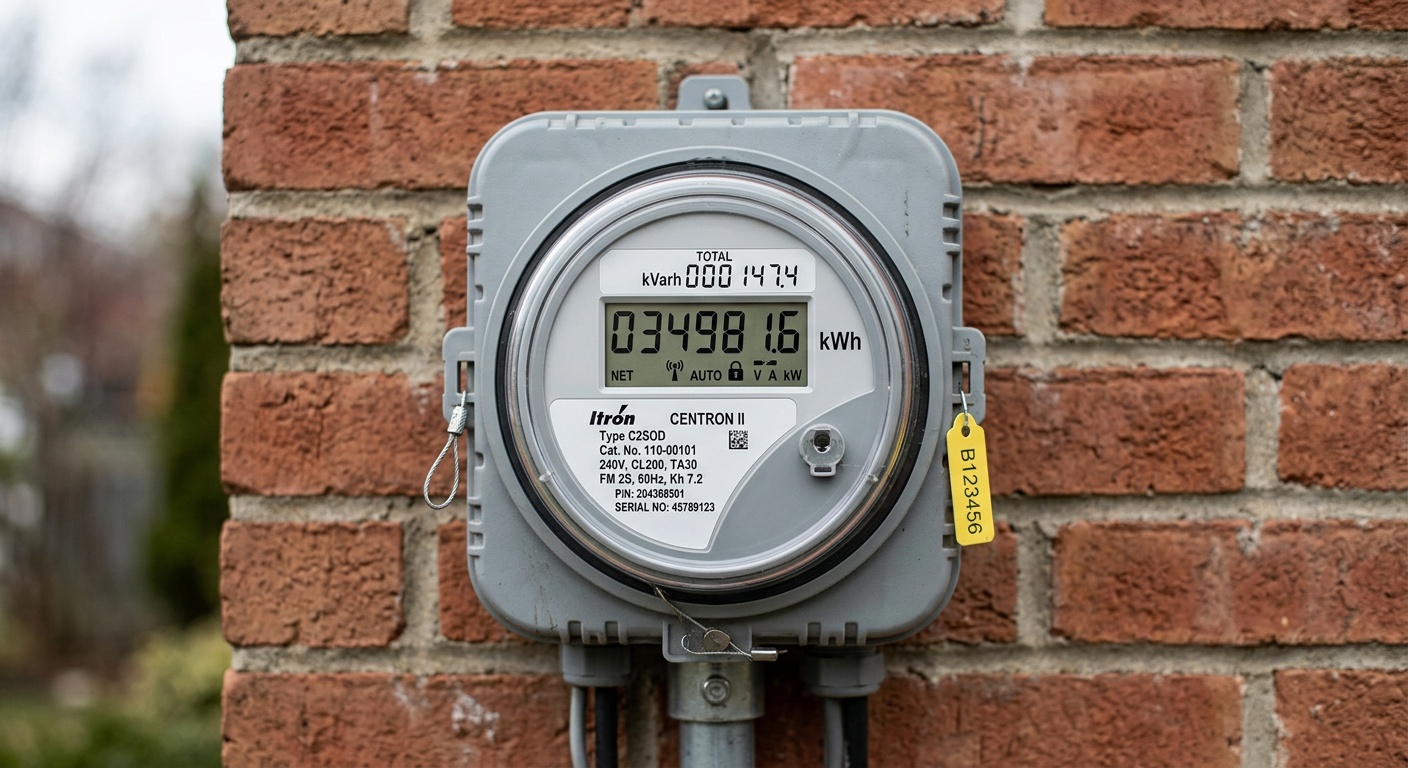
- Utility meter/service upgrade (if needed): $500–$1,500
- Permit fees: $150–$600 (varies widely by municipality)
- Inspection fees: Typically included in permit cost or $75–$200 separately
- Conduit, wiring, and hardware: $300–$800
- EV charger rough-in (while you’re at it): $300–$600 additional
Total realistic range: $2,500–$8,500+ depending on your home’s specific needs, location, and chosen panel type.
Here’s the strategic insight most articles miss: bundling your panel upgrade with your solar installation often saves you 15–25% versus doing them separately. Solar installers frequently have electrical contractors on their teams or as partners, and coordinating permits, utility coordination, and inspection scheduling as a single project eliminates redundant costs. Always ask your solar installer for a bundled quote that includes any required panel work.
Available Financial Incentives in 2026:
- Federal ITC (30%): Applies to solar systems and battery storage; panel upgrades made necessary by solar installation may qualify — consult your tax advisor.
- State-level rebates: California, Massachusetts, New York, and 18 other states have specific rebate programs for panel upgrades tied to electrification. California’s TECH Clean program offers up to $2,500 for panel upgrades as part of heat pump installations.
- Utility rebates: Many utilities offer $200–$1,000 for panel upgrades that enable demand response or smart grid participation.
Real Homeowner Scenarios
Scenario 1: The Martinez Family in Phoenix, Arizona
Carlos and Elena Martinez purchased a 1988 ranch-style home in Phoenix with a 100-amp FPE Stab-Lok panel. In early 2025, they decided to go solar to combat the increasingly brutal Arizona summers driving their utility bills to $380/month. Their solar installer immediately flagged the FPE panel as a dealbreaker — both for safety reasons and because their homeowner’s insurance carrier had notified them it would not renew coverage with the existing panel.
They opted for a full 200A service upgrade with a 30-space load center and had a dedicated EV circuit roughed in at the same time, anticipating their next vehicle purchase. Total panel upgrade cost: $3,800. Their 8.4kW solar system plus a 13.5kWh battery storage unit were installed simultaneously. Combined project cost: $32,400 before incentives, $22,680 after the federal ITC and Arizona solar equipment excise tax exemption. Their electricity bill dropped to an average of $28/month — a $352/month saving. Projected payback period: 5.3 years.
Scenario 2: The Patel Home in New Jersey
Priya Patel’s 2004 colonial in suburban New Jersey had a modern 200A panel with a Square D load center in reasonable condition — but only two available breaker slots and a bus bar rated at exactly 200A, leaving no headroom for solar backfeed. Her installer recommended a sub-panel addition rather than a full main panel replacement, which preserved her existing wiring investments.
A 100A sub-panel was installed in her garage to house EV charging (two circuits — she and her husband both drive EVs), solar interconnection breakers, and a battery storage interface. The sub-panel work cost $2,100. Her 9.6kW solar system with a 27kWh battery bank (two stacked units) went in cleanly. She’s now near-grid-independent from March through October and reduces grid draw by about 70% through winter. Her smart sub-panel setup allows time-of-use optimization, automatically charging her EVs and batteries during off-peak hours.
Scenario 3: New Construction in Colorado
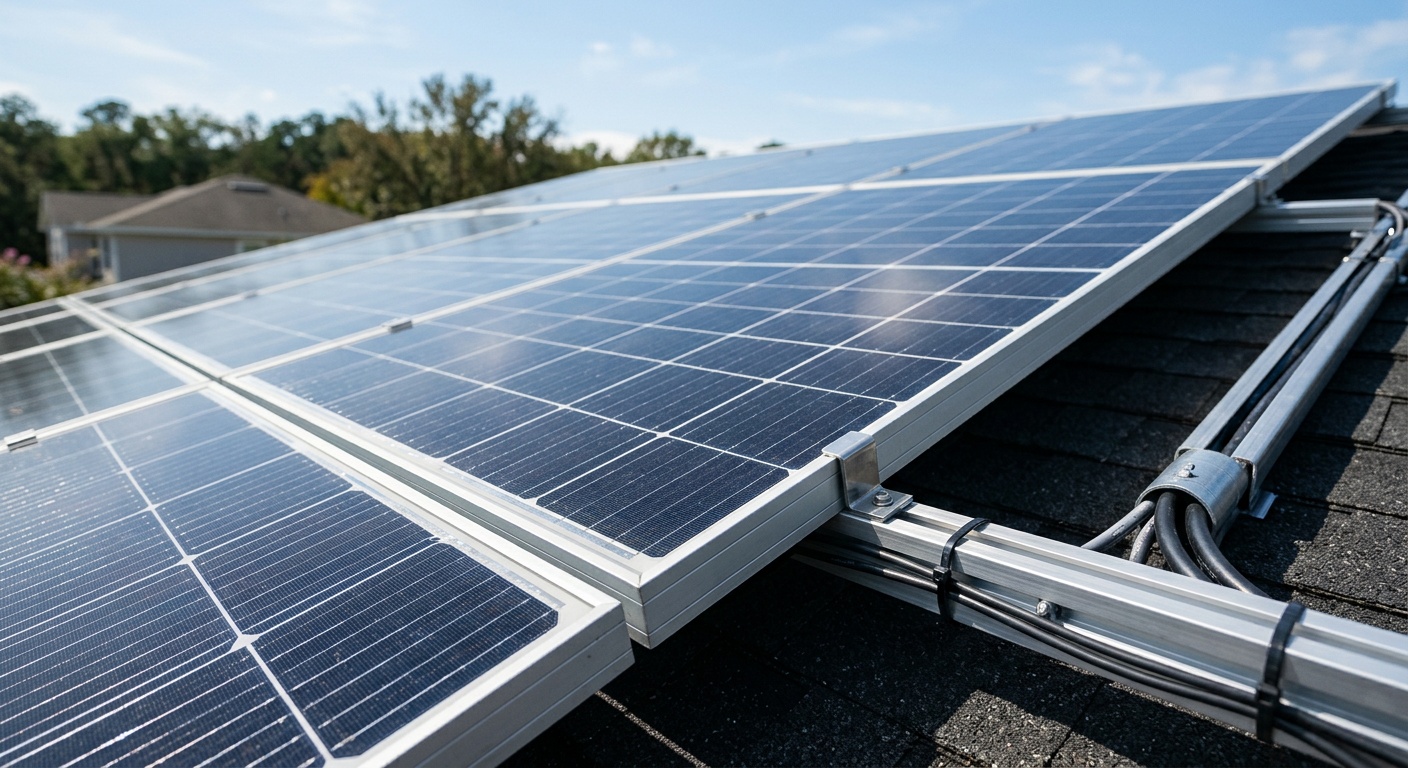
The Thornton family built a new home outside Denver in 2025, and their builder gave them the option to rough in solar-ready electrical infrastructure during construction for a $3,200 upcharge. This included a 400A service, a Span smart panel, conduit runs to the roof for future solar wiring, a dedicated battery storage alcove with pre-wired circuits, and two EV charging circuits in the garage. They didn’t install solar panels or batteries immediately — but when they added them 18 months later, the installation took two days instead of five and cost $4,800 less than comparable retrofits on nearby homes.
Lesson: If you’re building new or doing a major renovation, the marginal cost of going solar-ready during construction is a small fraction of the savings it enables later.
Solar-Ready Upgrade Impact at a Glance
The following chart illustrates the estimated percentage reduction in solar installation complexity and cost when proper panel infrastructure is already in place:
Benefit Areas: % Improvement with Solar-Ready Panel vs. Non-Ready Panel
72%
65%
22%
89%
94%
Source: Composite data from EnergySage installer surveys, NRECA field reports, and Wood Mackenzie residential solar installation benchmarks, 2025–2026.
Common Challenges and How to Overcome Them
Challenge 1: Utility Coordination Delays
One of the most frustrating bottlenecks in a panel upgrade project is utility coordination. When you upgrade from 100A to 200A or higher service, your utility must approve the new meter socket, disconnect power temporarily during installation, and often send an inspector. In busy markets — California, Texas, and the Northeast corridor in particular — these utility appointments can add 4–12 weeks to a project timeline.
How to overcome it: Start the utility coordination process before you’ve finalized your installer selection. Most utilities allow you to submit service upgrade applications independently or with just a licensed electrician’s signature. Getting this paperwork moving early can eliminate most of the delay. Also ask your installer specifically about their experience with your utility’s interconnection process — experienced local installers often have streamlined relationships with utility reps that dramatically speed things up.
Challenge 2: Hidden Infrastructure Issues
Older homes — particularly those built before 1980 — often have aluminum wiring, undersized service entrance conductors, or corroded connections that aren’t visible until an electrician opens the panel. These discoveries can add $500–$3,000 to a project unexpectedly.
How to overcome it: Budget a 20% contingency into your project estimate. During your initial electrician assessment, specifically ask them to evaluate service entrance conductor condition, presence of aluminum wiring in the home, and grounding system adequacy. Catching these issues in the assessment phase versus mid-project saves both money and scheduling headaches.
Challenge 3: Permit and Inspection Bureaucracy
In some municipalities, electrical permits for panel upgrades require multiple inspections, specific documentation formats, and can take weeks to process. Several California counties, for instance, have faced significant permit backlogs driven by the surge in solar + electrification projects since 2024.
How to overcome it: Work only with licensed electricians and solar installers who regularly pull permits in your specific jurisdiction. They know the quirks of local building departments, which inspectors to schedule, and how to submit clean permit applications that don’t get kicked back for revisions. Online permit portals in many cities now allow expedited processing for renewable energy projects — ask your contractor if your jurisdiction offers this.
Frequently Asked Questions
Do I absolutely need a panel upgrade to go solar, or can I work with what I have?
Not always — but often, yes. If you have a modern 200A panel from the last 15 years with at least 4 open breaker slots, an adequate bus bar rating, and no safety issues, you may be able to proceed with a standard solar installation without a full panel replacement. Your solar installer’s electrical team will assess this during the site survey. However, if you plan to add battery storage, EV charging, or additional high-draw appliances within the next 5 years, upgrading proactively during your solar project is almost always more cost-effective than retrofitting later.
Will a panel upgrade increase my home’s resale value?
Yes, measurably. According to the 2025 National Association of Realtors Energy Efficiency Study, homes with upgraded 200A+ electrical panels and solar-ready infrastructure sell for an average of 3.2–5.7% more than comparable homes without these features in markets where EVs and solar have meaningful penetration. In California, Colorado, and the Northeast, this premium can exceed 6%. More importantly, homes with outdated panels (especially FPE or Zinsco) increasingly face buyer objections, insurance complications, and inspection flags that can kill or delay sales. Upgrading removes these friction points entirely.
What’s the difference between a solar-ready panel and a standard panel upgrade, and do I need to specify this?
Yes, you absolutely need to specify this — and in detail. A standard panel upgrade simply replaces your old panel with a new one of the same or higher amperage. A solar-ready upgrade includes specific considerations: adequate bus bar rating with headroom for backfeed current, physical breaker space allocation for solar and battery circuits, proper grounding for inverter systems, conduit routing provisions for solar wiring runs, and in 2026 best practice, smart panel capability or at minimum smart-meter compatibility. When getting quotes, ask each contractor to confirm their proposal specifically addresses all these elements. Request itemized specifications, not just a total price. An electrician who can’t explain bus bar ratings and solar backfeed calculations probably isn’t the right partner for this project.
Your Solar-Ready Action Plan: Powering the Next Decade
Here’s the reality of where we are in 2026: the homeowners who will benefit most from the ongoing solar and clean energy boom are not the ones who waited for perfect conditions — they’re the ones who invested in the right infrastructure early. Your electrical panel is that infrastructure.
Here’s your clear, practical roadmap forward:
- Within the next 30 days: Schedule a licensed electrician to assess your current panel. Cost: $150–$250. This single step gives you a clear picture of what you’re working with and what your upgrade path looks like.
- Get bundled quotes: Approach 2–3 solar installers and explicitly ask for proposals that include any required panel work. Compare them not just on solar system price but on total infrastructure investment.
- Explore incentives proactively: Contact your utility about demand response rebates for smart panels. Check your state’s energy office website for 2026 electrification rebate programs. Confirm your solar installer will correctly document panel work for potential federal ITC applicability.
- Think in systems, not components: When designing your panel upgrade, map out your 10-year energy vision. EVs, batteries, heat pumps — configure your panel for that future, not just today’s solar array.
- Act before the rush: Electricians and solar installers in most markets are booking 6–10 weeks out as of mid-2026. The summer installation season creates even longer waits. Moving now puts you ahead of the curve.
As the grid becomes more distributed, more dynamic, and more reliant on residential energy assets — your home isn’t just a place to consume power, it’s becoming a node in a networked energy ecosystem. The electrical panel sitting in your basement or utility closet is, increasingly, your gateway to participating in that ecosystem on your own terms.
The real question isn’t whether to upgrade your electrical panel — it’s whether you’ll do it strategically, capturing every available incentive and future-proofing your home in the process, or reactively, paying premium prices to fix problems you could have anticipated today.
Your energy independence starts with one honest look at that panel. What will yours be ready for?