Smart Home Devices That Actually Reduce Monthly Energy Costs
Reading time: 14 minutes
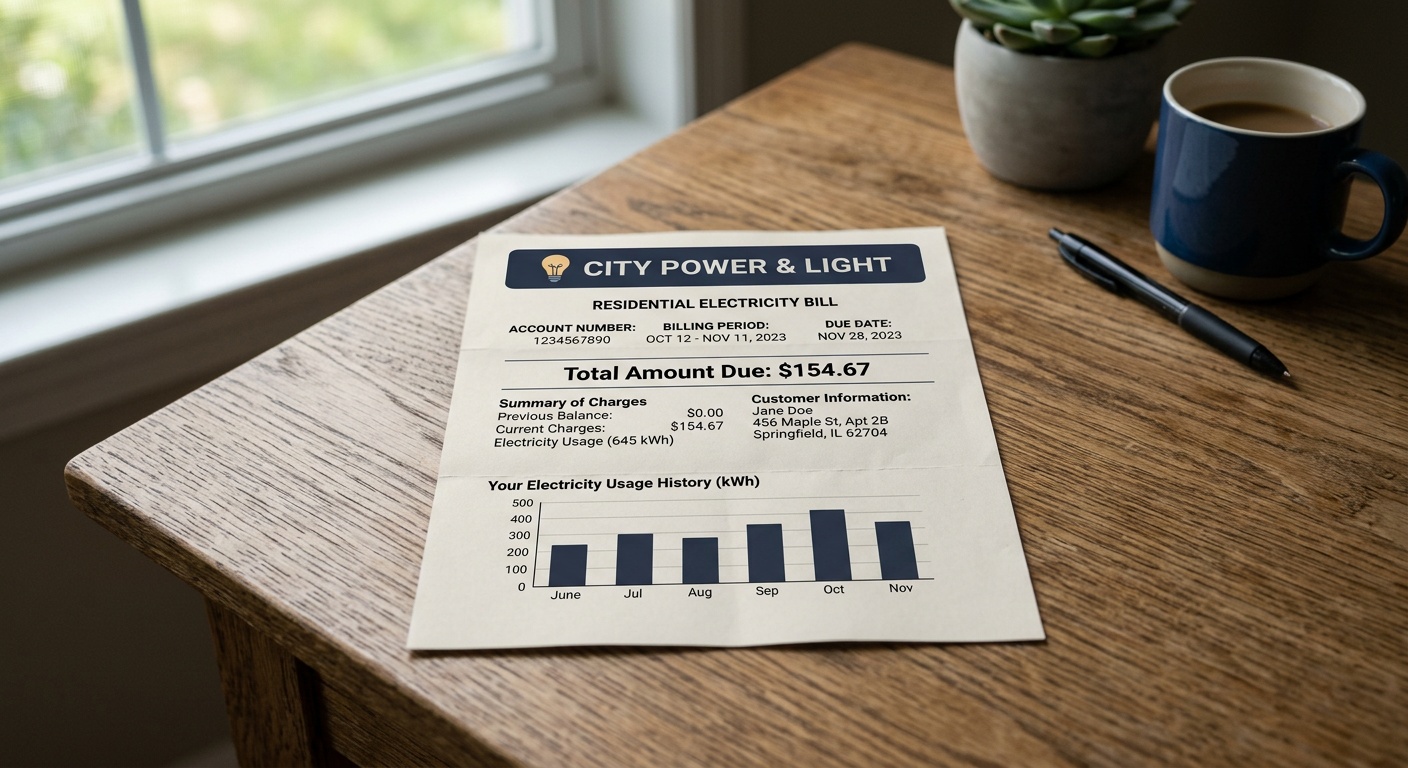
Your electricity bill arrives. You squint at the total, convinced there’s been a mistake. There hasn’t. The average U.S. household spent $1,784 on electricity in 2025, according to the U.S. Energy Information Administration — and that number is still climbing in 2026 as grid demand intensifies. Sound familiar?
Here’s the straight talk: most people buying smart home devices are chasing convenience, not savings. They end up with a voice-activated lightbulb that saves them $2 a year and wonder why the investment never pays off. But a strategically assembled smart home ecosystem? That’s a different story entirely.
This guide cuts through the gadget glamour to show you exactly which devices deliver measurable returns, how to prioritize purchases for your home’s specific energy profile, and what real households are saving in 2026. Ready to turn your home into a lean, efficient machine?
Table of Contents
- Why “Smart” Only Matters If It Saves Money
- Smart Thermostats: The Undisputed Champions
- Energy Monitoring Systems: Know Before You Cut
- Smart Lighting: Small Savings, Big Scale
- Smart Appliances and Load Management
- Device Comparison: Real ROI Numbers
- 3 Common Mistakes and How to Avoid Them
- Your Smart Home Energy Roadmap
- FAQs
Why “Smart” Only Matters If It Saves Money
The smart home market crossed $174 billion globally in 2025, and projections for 2026 push that figure toward $195 billion. That’s a lot of devices — many of which contribute nothing meaningful to energy reduction. A smart refrigerator with a touchscreen display? Mostly a novelty. A whole-home energy monitor paired with a learning thermostat and smart plugs? That’s a system that pays for itself.
The distinction matters because energy savings follow a power-law distribution in smart homes. The top 20% of energy-saving devices account for roughly 80% of your total achievable savings. Heating, cooling, and hot water heating represent approximately 60–65% of a typical home’s energy consumption. That’s where smart technology earns its keep.
Before buying anything, ask yourself three questions:
- Does this device actively control a high-consumption system?
- Does it use behavioral data or machine learning to optimize automatically?
- Does it provide feedback that changes how I use energy?
If a device answers “yes” to at least two of those questions, it belongs in a serious energy-saving strategy. If not, it’s probably a convenience purchase — which is fine, but don’t count on it to move your utility bill.
Smart Thermostats: The Undisputed Champions
If you install only one smart device for energy savings, make it a smart thermostat. This is not even a close debate in 2026. The data from millions of installed units is now compelling and consistent.
How Learning Thermostats Actually Work
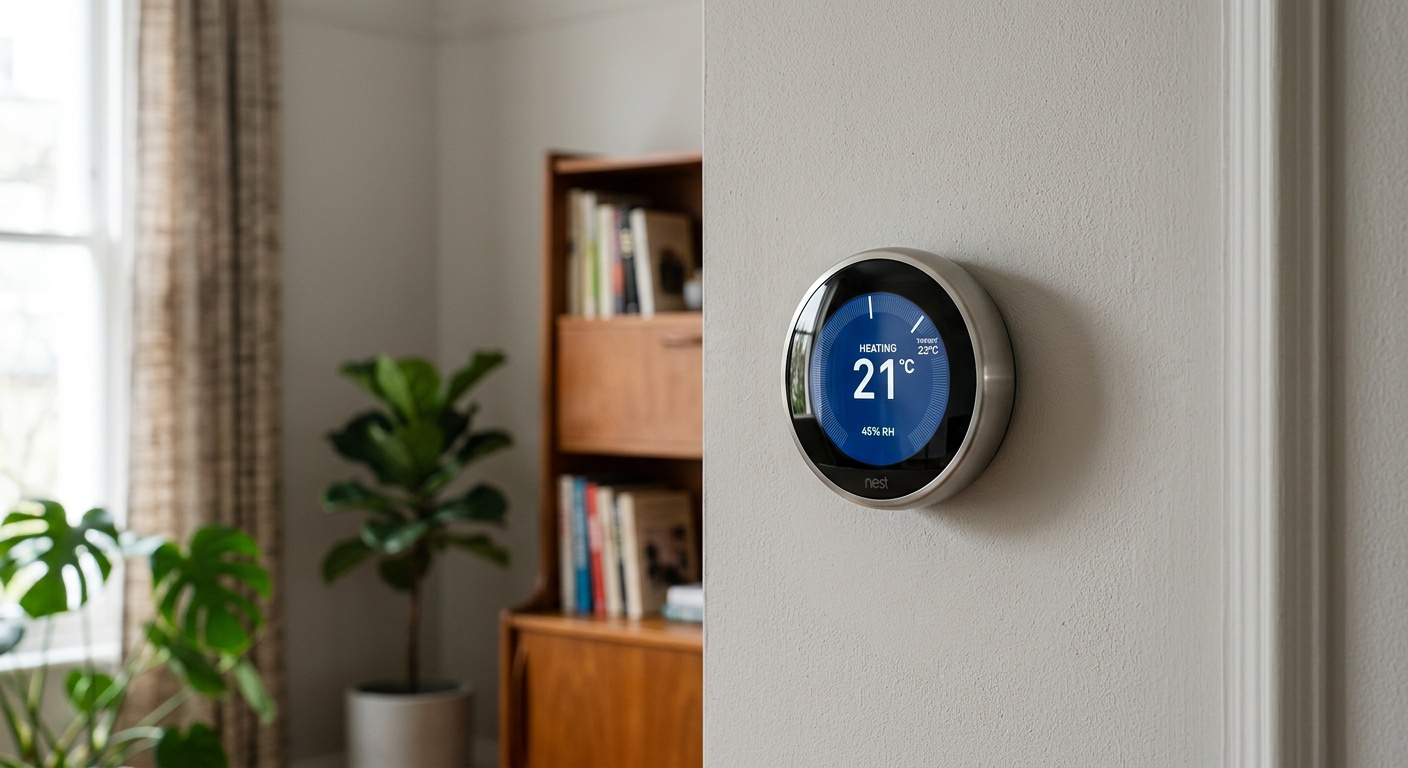
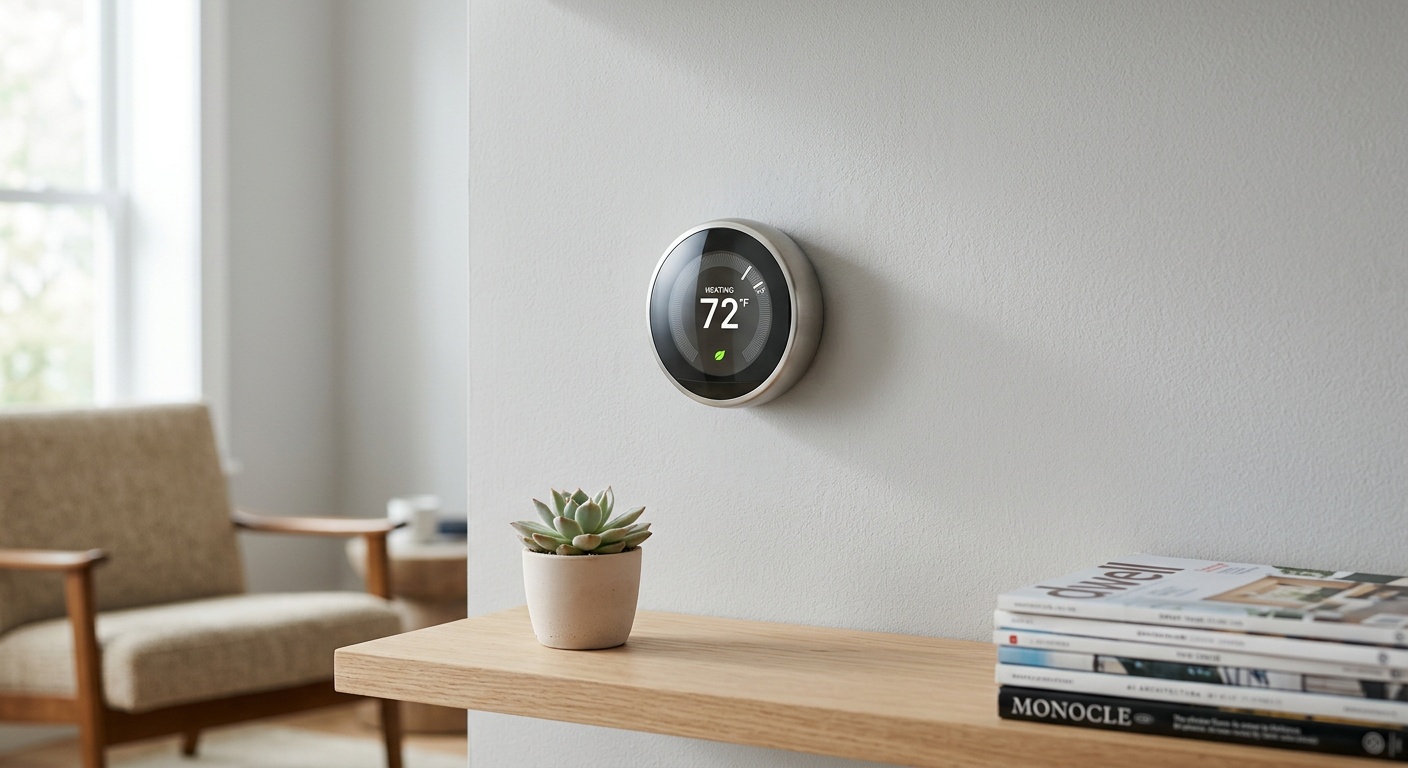
Modern smart thermostats — including the Google Nest Learning Thermostat (4th Gen, released late 2024), ecobee SmartThermostat Premium, and Honeywell Home T9 — don’t just let you schedule temperatures remotely. The truly intelligent models use a combination of occupancy sensors, local weather forecasts, utility rate schedules, and machine learning to anticipate your needs before you have them.
Here’s how it works in practice: the thermostat monitors when you’re home, when you leave, when you sleep, and how quickly your home heats or cools given outdoor conditions. Over two to four weeks, it builds a model. After that, it’s not following your schedule — it’s predicting your behavior and pre-conditioning your home accordingly, avoiding inefficient last-minute temperature swings.
The ecobee system, for example, uses remote room sensors to detect occupancy across multiple zones, preventing the common problem of heating or cooling empty rooms. In a 2,200 sq. ft. home where the upstairs goes unused during the workday, that single feature can cut HVAC consumption by 15–20% during those hours.
Real Savings Data from 2025–2026
Google reported in early 2026 that Nest thermostat users saved an average of $145–$189 per year on heating and cooling costs. ecobee’s independent study, verified by a third-party energy auditor, showed average annual savings of 23% on HVAC costs — translating to $180–$210 for the median American home.
Case Study — The Kowalski Family, Columbus, Ohio: A family of four in a 1,950 sq. ft. home installed a Nest Learning Thermostat in March 2025. Their previous annual HVAC bill was approximately $1,100. After 12 months of data, their total HVAC energy cost dropped to $847 — a savings of $253, or 23%. The device cost $249 and paid for itself in under 13 months.
Pro Tip: Pair your smart thermostat with your utility’s Time-of-Use (TOU) rate plan if available. In 2026, roughly 40% of U.S. utilities now offer TOU rates, where electricity is cheaper during off-peak hours (typically 9 PM–6 AM). Smart thermostats that integrate with TOU rates can pre-cool or pre-heat your home during cheap periods, reducing your bill without reducing comfort.
Energy Monitoring Systems: Know Before You Cut
You cannot manage what you don’t measure. This principle, obvious in business, is surprisingly rare in home energy management. Whole-home energy monitors are among the most underrated smart home investments available in 2026.
Devices like the Sense Energy Monitor, Emporia Vue 3, and Ecoflow PowerStream Panel Monitor install in your electrical panel and use current transformers (CTs) to track every circuit — or in the case of Sense, use machine learning to identify individual appliances by their unique electrical signatures.
The Psychology of Visibility
A landmark study from the American Council for an Energy-Efficient Economy found that homeowners who receive real-time energy feedback reduce consumption by 5–15% within the first six months — not because their devices changed, but because their behavior changed. Seeing your clothes dryer consume $0.38 per cycle in real time prompts action in a way that a monthly utility bill summary never does.
Case Study — Marcus T., Austin, Texas: Marcus installed a Sense Energy Monitor in his 3-bedroom home in late 2024. Within three weeks, the app identified that his 2009-era chest freezer in the garage was consuming $31 per month — nearly as much as his refrigerator. He replaced it with an Energy Star model and saved $22/month. Over a year, that single insight saved him $264. The Sense monitor cost $299. Total payback: under 14 months, and that doesn’t count the dozen smaller behavioral changes he made after seeing his real-time data.
Beyond behavioral changes, energy monitors serve a critical diagnostic function. They can identify:
- Phantom loads — devices consuming power in standby mode
- HVAC inefficiency — a system running longer than it should due to a dirty filter or failing component
- Water heater cycling — flagging a failing heating element before a full breakdown
- Unexpected overnight consumption — often revealing devices or habits you didn’t know existed
In 2026, next-generation monitors like the Emporia Vue 3 also integrate with solar panels and home battery systems, giving homeowners with energy storage a complete picture of generation, storage, and consumption — essential for maximizing self-sufficiency and minimizing grid dependency.
Smart Lighting: Small Savings, Big Scale
Smart lighting gets a lot of attention, and it does deliver savings — just not dramatic ones on a device-by-device basis. The power lies in systematic deployment: automating lights across your entire home so that no bulb stays on unnecessarily.
The math is straightforward. LED bulbs already consume 75% less energy than incandescent bulbs, so the baseline is already efficient. But even LEDs waste energy when left on in empty rooms. Smart lighting systems with occupancy sensors and automated schedules eliminate that waste entirely.
In 2026, the leading systems — Philips Hue, LIFX, Lutron Caséta, and the now widely-adopted Matter-compatible ecosystems — offer integration with occupancy sensors, daylight sensors, and geofencing. A well-configured system running 40 smart bulbs across a home can save $80–$140 per year compared to manually managed LED lighting.
That’s not life-changing, but it’s meaningful — especially when you consider that smart switches (which control multiple bulbs) offer better value than smart bulbs for most homeowners. A single Lutron Caséta smart dimmer switch at $60 can control a ceiling fixture with six bulbs and runs flawlessly for 10+ years with no bulb replacement.
Quick Scenario: You have five rooms where lights are frequently left on when empty. Average wattage per room: 40W. Average daily waste: 3 hours per room. At $0.16/kWh, that’s about $35/year in pure waste. Add smart occupancy switches to those five rooms for $300 total, and your payback is under 9 years — but the convenience and peace-of-mind value accelerates that considerably.
Smart Appliances and Load Management
The newest frontier of home energy savings in 2026 isn’t a single device — it’s the coordination of appliances around dynamic electricity pricing. This is called Demand Response (DR), and it’s becoming a mainstream feature in smart home ecosystems.
Smart Water Heaters and Heat Pump Technology
Water heating accounts for roughly 18% of home energy use — second only to space conditioning. Smart water heaters, particularly heat pump water heaters (HPWHs) with smart scheduling, have become one of the fastest-growing categories in 2026.
The Rheem ProTerra and A.O. Smith Voltex hybrid models both feature Wi-Fi connectivity, utility integration, and smart scheduling. They can shift heating cycles to overnight off-peak hours automatically, saving $80–$120 annually on water heating alone. When enrolled in utility demand response programs (available in over 30 states in 2026), homeowners receive additional rebates of $50–$100 per year for allowing brief, automated adjustments during grid peak events.
Smart Plugs and Phantom Load Elimination
Phantom loads — the standby power consumed by electronics that are “off” but still plugged in — account for 5–10% of residential electricity use, according to the Lawrence Berkeley National Laboratory. In the average home, that’s roughly $90–$180 per year in wasted electricity.
Smart plugs like the Kasa EP25, TP-Link Tapo P115, and Wyze Plug cost $10–$20 each and can be scheduled to cut power completely during nighttime hours or when you leave home. Deploy six to eight across your entertainment system, home office, and kitchen counter appliances, and you can realistically recover $60–$100 in phantom load savings annually for a $100–$150 investment.
In 2026, many smart plugs now integrate directly with whole-home energy monitors, automatically flagging circuits that are consuming power unexpectedly and offering one-tap shutoff from a unified app — no manual auditing required.
Device Comparison: Real ROI Numbers
| Device | Avg. Cost (2026) | Est. Annual Savings | Payback Period | Difficulty to Install |
|---|---|---|---|---|
| Smart Thermostat | $130–$250 | $145–$210 | 9–18 months | Low–Moderate |
| Whole-Home Energy Monitor | $200–$350 | $150–$300* | 12–24 months | Moderate (panel work) |
| Smart Water Heater | $900–$1,400 | $200–$350 | 3–5 years | High (professional install) |
| Smart Lighting (whole home) | $200–$500 | $80–$140 | 2–5 years | Low |
| Smart Plugs (6–8 units) | $80–$150 | $60–$120 | 12–20 months | Very Low |
*Energy monitor savings are behavior-dependent and represent the median outcome from 2025–2026 user studies. Your results will vary based on what inefficiencies are discovered.
Annual Energy Savings Potential by Device Category
Estimated Annual Savings (USD) — Median U.S. Household, 2026
$175
$225
$275
$110
$90
3 Common Mistakes and How to Avoid Them
Mistake #1: Buying Devices Without an Energy Audit
Many homeowners invest in smart technology before understanding their home’s energy profile. If your biggest loss is air infiltration through unsealed windows, no smart thermostat will fix that — it’ll just run your HVAC harder. Before spending on smart devices, conduct a simple energy audit. Many utilities offer free or subsidized professional audits in 2026, and tools like the Sense Energy Monitor serve as a continuous DIY audit platform.
The fix: Spend 30 minutes reviewing your last 12 months of utility bills. Identify your two highest-consumption months. Then map your usage categories (heating, cooling, water heating, appliances, lighting) using your utility’s breakdown if available, or an online estimator. Buy devices that target your top two categories first.
Mistake #2: Creating a Fragmented Ecosystem
The smart home market in 2026, while better unified thanks to the Matter protocol, still has significant ecosystem fragmentation. A thermostat on one platform, lights on another, and smart plugs on a third creates management overhead and prevents the coordinated automations that deliver the most savings.
The fix: Choose a hub ecosystem (Google Home, Amazon Alexa, Apple HomeKit, or a local solution like Home Assistant) and prioritize Matter-compatible devices that work natively across all major platforms. This gives you flexibility without lock-in and enables cross-device automations — like “when everyone leaves home, turn off all plugs, lower the thermostat, and cut non-essential circuits.”
Mistake #3: Set-It-and-Forget-It Syndrome
Smart devices improve with engagement. A thermostat you’ve never reviewed, a lighting schedule you set up 18 months ago, or energy monitor alerts you’ve muted — these represent lost savings. Homeowners who actively review their smart home data monthly save significantly more than those who don’t.
The fix: Set a monthly “energy review” calendar reminder — 15 minutes to check your energy monitor dashboard, review your thermostat’s efficiency report, and scan your smart plug consumption logs. Most platforms now generate automated monthly summaries that surface actionable insights automatically. Read them.
Your Smart Home Energy Roadmap: From First Device to Full System
Here’s the bottom line: smart home devices can realistically save the average household $500–$900 per year once a full, coordinated ecosystem is operational. That’s not a one-time purchase outcome — it’s the result of a deliberate, phased approach. Here’s how to build it:
Step 1 — Month 1: Install an Energy Monitor
Before anything else, understand what you’re working with. Install a Sense or Emporia Vue 3 to establish your baseline. Spend 30 days doing nothing but observing. You’ll likely identify 2–3 specific energy wasters you didn’t know existed.
Step 2 — Month 2: Smart Thermostat Installation
Armed with your baseline data, install a learning thermostat. Choose a model compatible with your HVAC type (verify C-wire availability first) and your preferred smart home ecosystem. If your utility offers a TOU rate, enroll immediately and configure grid-responsive scheduling.
Step 3 — Months 3–4: Smart Plugs for High-Load Standby Devices
Use your energy monitor data to identify which circuits or appliances draw the most phantom load. Deploy smart plugs with energy monitoring (not just control) on entertainment systems, home office setups, and any older appliances awaiting replacement.
Step 4 — Months 5–6: Automate Your Lighting
Focus first on high-traffic rooms and known problem areas (kids’ rooms, garages, utility spaces). Install smart switches rather than smart bulbs where possible for durability and cost efficiency.
Step 5 — Year 2 Planning: Major Appliance Upgrades
As older appliances reach end-of-life, replace them with smart, Energy Star-certified models. A smart heat pump water heater, for example, qualifies for a $300 federal tax credit in 2026 under the extended Inflation Reduction Act provisions — dramatically improving the ROI calculation.
The broader trend is clear: in 2026, homes are becoming active participants in the energy grid through demand response programs, battery storage integration, and AI-driven consumption optimization. The homeowners who build smart energy systems today are positioning themselves for even greater savings as dynamic pricing becomes universal and grid-interactive homes earn direct financial rewards from utilities.
Your challenge this week: Pull up your last three months of utility bills. Find your average monthly consumption in kWh. That single number is your benchmark — everything you do from here is measured against it. What would a 20% reduction mean for your annual budget?
Frequently Asked Questions
Do smart home devices really pay for themselves, or is it mostly marketing?
For the right devices, the payback is real and well-documented. Smart thermostats have the strongest, most consistent ROI — typically paying for themselves within 9–18 months with verified savings of $145–$210 annually. Whole-home energy monitors pay off faster for households with hidden inefficiencies, which describes most homes older than 10 years. The key is prioritizing devices that control high-consumption systems (HVAC, water heating) rather than novelty gadgets. Marketing exaggerates the savings of low-impact devices; it generally undersells the savings of thermostats and energy monitors because those numbers are less flashy.
Is the Matter smart home standard actually worth caring about in 2026?
Yes, and increasingly so. Matter 1.4 (released late 2025) expanded device support to include energy management appliances, EV chargers, and solar inverters — making it the first time a single standard covers the full residential energy ecosystem. In 2026, buying Matter-compatible devices means you’re not locked into any single manufacturer’s platform, your devices will work with future products you haven’t bought yet, and cross-ecosystem automations (crucial for coordinated energy management) work reliably. It’s not perfect — some advanced features still require manufacturer-specific apps — but ecosystem flexibility is significantly better than it was even two years ago.
What if I rent my home — can I still benefit from smart home energy devices?
Absolutely, with a few adjustments. Smart plugs are completely renter-friendly — no installation required, just plug in. Smart thermostats are trickier: some landlords will approve them (especially if they pay the utility bill), and several models like the Nest Thermostat (E model) involve no permanent modification. Energy monitors require panel access and may need landlord approval, but portable plug-in energy monitors (like the Kill A Watt P4460) offer a low-tech alternative for monitoring individual appliances. Smart lighting via plug-in smart bulbs (not hardwired switches) requires zero installation approval. A renter deploying smart plugs and smart bulbs strategically can still achieve $80–$150 in annual savings with a $100–$150 investment.