How to Read Your Electric Bill and Spot Hidden Charges
Reading time: 14 minutes
You open your electricity bill, glance at the total, wince, and pay it. Sound familiar? Most Americans do exactly this every month — and in doing so, they unknowingly hand over hundreds, sometimes thousands, of extra dollars each year to charges they never noticed, never questioned, and never had to pay.
Here’s the uncomfortable truth: your electric bill is not just a simple invoice. It’s a layered document engineered with industry-specific jargon, rate tiers, regulatory fees, and optional add-ons that utilities are not exactly rushing to explain to you. In 2026, the average U.S. household pays $142 per month for electricity — up nearly 18% from 2022 — according to the U.S. Energy Information Administration. Yet studies show that fewer than 30% of consumers can accurately identify even the basic components of their bill.
This guide is your decoder ring. We’ll walk through every section of a typical electric bill, highlight the charges that silently drain your wallet, and give you actionable strategies to challenge, reduce, or eliminate them entirely. Whether you’re a renter, homeowner, or small business owner, this knowledge is your first line of financial defense.
Table of Contents
- The Anatomy of an Electric Bill
- Spotting Hidden and Questionable Charges
- Understanding Rate Structures and Tiers
- Real-World Case Studies
- How Charges Break Down: A Visual Overview
- Utility Charge Types Compared
- Common Challenges and How to Overcome Them
- Frequently Asked Questions
- Your Power Back: A 5-Step Action Plan
The Anatomy of an Electric Bill
Before you can spot what’s wrong, you need to understand what’s supposed to be there. A standard residential electric bill in 2026 contains several distinct sections, each representing a different kind of cost. Let’s break them down systematically.
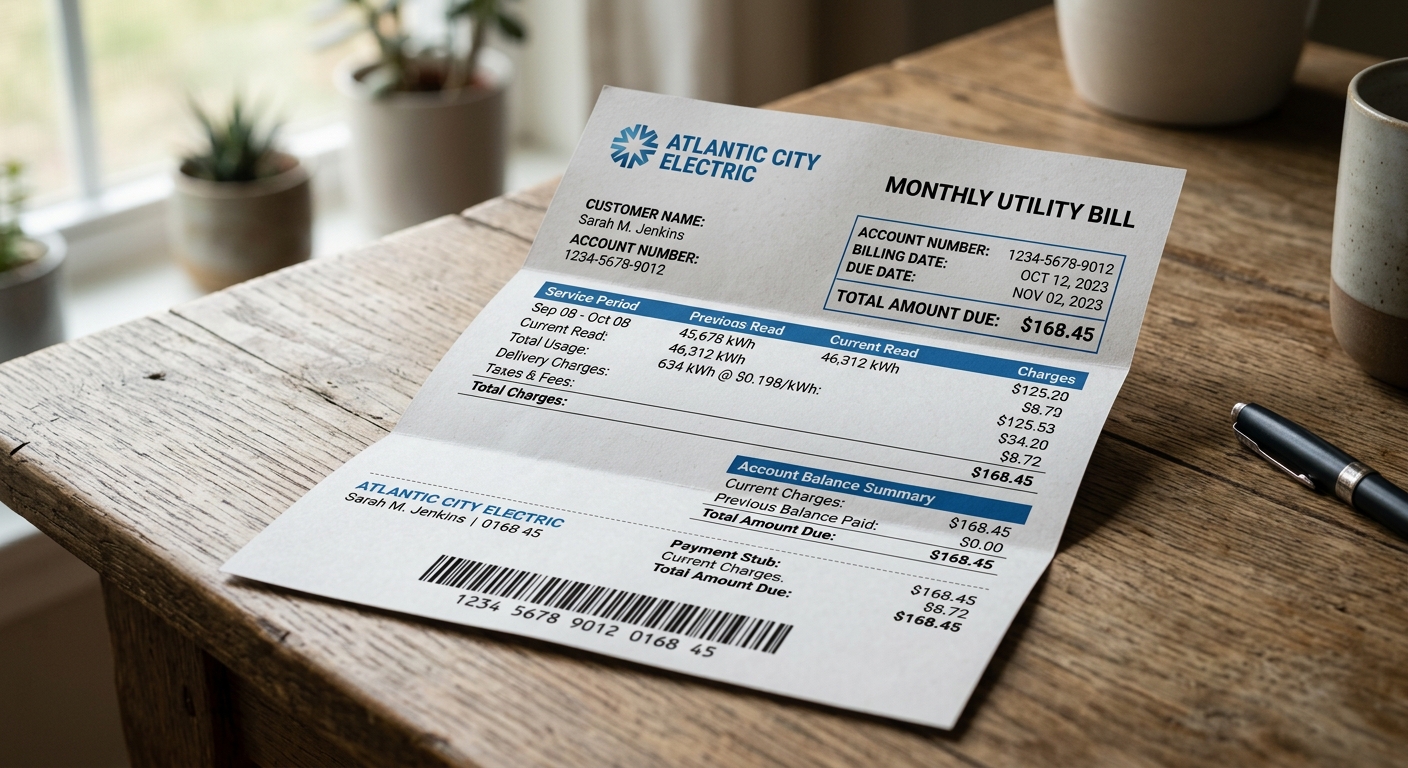
Account and Usage Summary
The top of your bill — the summary section — typically displays your account number, service address, billing period, and total amount due. It also shows your kilowatt-hour (kWh) consumption for the billing cycle. This number is arguably the most important figure on your bill because every energy-related charge flows from it.
Pay close attention to the billing period dates. If your bill covers 28 days one month and 33 days the next, your usage will naturally look higher — not because you consumed more, but because you were billed for more days. This is more common than most people realize, especially around holidays when meter reading schedules shift.
Pro Tip: Convert your total consumption to a daily average (total kWh ÷ billing days) so you can make apples-to-apples comparisons month over month.
The Energy Charge
The energy charge is the most straightforward component: it’s the cost of the electricity you actually used, calculated by multiplying your kWh consumption by your utility’s rate per kWh. In 2026, the national average residential electricity rate hovers around 15.8 cents per kWh, though rates vary dramatically by state — from roughly 11 cents in Louisiana to over 29 cents in California and Hawaii.
This is where tiered pricing can sneak up on you. Many utilities don’t charge a flat rate for every kWh. Instead, they charge a lower rate for the first block of consumption and progressively higher rates as you use more. We’ll dig into this more deeply in the Rate Structures section.
The Delivery Charge (Distribution and Transmission Fees)
Here’s where it gets interesting — and where many hidden costs lurk. Even if you generate your own solar energy and draw zero from the grid, you’ll almost certainly still owe a delivery charge. This fee covers the cost of maintaining the infrastructure that delivers electricity to your home: power lines, transformers, substations, and the grid itself.
Delivery charges are typically broken into two sub-components:
- Transmission charges: Costs associated with moving electricity over high-voltage lines from generating plants to local substations.
- Distribution charges: Costs for delivering electricity from substations to your home through local lines.
In many states, delivery charges now represent 40–55% of a customer’s total bill — a significant shift from a decade ago when energy supply costs dominated. This means even if electricity generation prices drop, your bill may not go down much at all.
Fixed Monthly Charges and Customer Fees
Separate from usage-based charges, most utilities tack on a fixed customer charge — sometimes called a service charge, meter charge, or basic service fee. This flat fee exists regardless of how much (or how little) electricity you use. In 2026, these fees range from as low as $5 to as high as $35 per month depending on your utility and state.
This is particularly punishing for low-income households or customers who have dramatically reduced consumption through efficiency measures or rooftop solar. You could cut your energy use by 80% and still owe nearly the same fixed fee every month.
Spotting Hidden and Questionable Charges
Now we get to the core of the matter. Beyond the straightforward energy and delivery charges, electric bills are riddled with line items that are either poorly explained, discretionary, or outright worth challenging. Here’s what to look for.
Fuel Adjustment Charges
Also called a fuel cost adjustment, energy cost adjustment, or purchased power adjustment, this charge allows utilities to pass the variable costs of fuel — natural gas, coal, oil — directly to customers outside of the regular rate-setting process. Think of it as a utility’s escape valve: if fuel prices spike, they can increase your bill almost immediately without going through formal regulatory approval.
In 2025, when natural gas prices surged due to a combination of cold weather events and supply disruptions, some utility customers in the Midwest saw fuel adjustment charges spike by over 200% within a single billing period. By early 2026, these charges had moderated somewhat, but they remain volatile and worth monitoring every single month.
What to do: Track this line item each month. If it seems unusually high compared to recent bills, visit your utility’s website or call customer service — most utilities are required to publish fuel cost data publicly.
Demand Charges (Residential Customers Beware)
Demand charges are common on commercial utility accounts, but a growing number of utilities are now applying them to residential customers as well — often with minimal fanfare. A demand charge is based not on how much electricity you use, but on your peak usage rate — typically the highest 15-to-30-minute average consumption during the billing period.
Run your dishwasher, air conditioner, electric dryer, and oven simultaneously one afternoon, and that brief peak could inflate your bill by $15–$50 — even if your total monthly usage was modest. In 2026, approximately 14% of U.S. utilities have introduced some form of residential demand pricing, and that number is expected to grow as smart meters become ubiquitous.
Renewable Energy and Green Program Fees
Many utilities offer optional “green energy” or “renewable energy” programs that allow customers to support wind, solar, or other clean energy sources for a small monthly premium. These programs are supposed to be opt-in — but numerous consumer complaints filed with state public utility commissions in 2025 revealed that some utilities were automatically enrolling new customers in these programs and burying the charge in the bill.
Check your bill for any line items referencing “green power,” “renewable portfolio,” “clean energy rider,” or similar language. If you didn’t actively sign up for it, you may be entitled to a refund and cancellation.
Late Fees and Reconnection Charges
Late fees are standard, but the amounts vary wildly — from 1.5% of the unpaid balance to flat fees of $20 or more. More critically, reconnection fees after service disconnection can run anywhere from $25 to $200 depending on your utility and the time of reconnection (after-hours reconnections often cost more).
If you’ve ever had your service interrupted due to non-payment and then quietly paid a reconnection fee without questioning it, check whether your utility is regulated to cap these fees. Many state utility commissions set maximum limits that utilities sometimes quietly exceed.
Meter Reading Estimates
When a utility meter reader cannot access your meter (common in gated communities, apartments, or during severe weather), the utility may issue an estimated bill based on historical usage. This is legal and disclosed — but the estimate is sometimes significantly higher than actual usage, especially if your consumption patterns have changed.
Look for the word “estimated” or the letter “E” next to your meter reading on the bill. If you see it, take your own meter reading and compare. Request a corrected bill if there’s a significant discrepancy.
Understanding Rate Structures and Tiers
Rate structures are the invisible architecture of your electric bill. Understanding them is essential to both spotting overcharges and making strategic decisions about when and how you use energy.
Tiered (Inclining Block) Rates
Under this model, your per-kWh cost increases as your usage crosses certain thresholds. A common structure might look like:
- Tier 1 (0–500 kWh): $0.13/kWh
- Tier 2 (501–1,000 kWh): $0.18/kWh
- Tier 3 (1,001+ kWh): $0.26/kWh
A household consuming 1,100 kWh in a summer month would pay dramatically more per unit for those top 100 kWh than they would for the first 500. Reducing consumption by just 10% might push you below a tier threshold and deliver disproportionate savings.
Time-of-Use (TOU) Rates
Time-of-use pricing is rapidly becoming the default rate structure in 2026, particularly in states with high renewable energy penetration like California, Texas, and New York. Under TOU pricing, the per-kWh cost varies by time of day — typically:
- On-peak hours (weekday afternoons/evenings): Higher rates
- Off-peak hours (nights, weekends, early mornings): Lower rates
- Super off-peak (midday in solar-heavy grids): Lowest rates
The opportunity for savings here is real. Running your dishwasher at 10 PM instead of 6 PM, or charging an electric vehicle overnight, can meaningfully reduce your bill under a TOU structure. But if you don’t know you’re on a TOU plan — or if you were automatically switched to one — you might be getting punished for daytime energy use without knowing why.
Real-World Case Studies
Case Study 1: The Chicago Apartment Renter
Maria, a 34-year-old graphic designer living in a Chicago apartment, noticed her electric bills had crept up from around $85/month to $127/month over six months, despite no changes in her habits or appliances. When she finally sat down to compare bills line by line, she discovered a renewable energy rider of $18/month that had been added without her knowledge after she renewed her lease. Her landlord’s building had been enrolled in a utility green program, and the costs were being passed to tenants individually.
After contacting the Illinois Commerce Commission, Maria learned she had the right to opt out. She did so, received a partial refund for three months of charges, and her bill dropped back to normal. Total recovered: approximately $54, plus ongoing monthly savings of $18.
Case Study 2: The Phoenix Homeowner on a New TOU Plan
David, a retired teacher in Phoenix, Arizona, was automatically migrated to a time-of-use rate plan by his utility in January 2026 — a change announced via a single notice buried in a paper bill. He didn’t notice until his July bill came in at $340, nearly double his previous summer average of $180.
Investigation revealed that David was running his pool pump, air conditioning, and laundry during peak hours (3 PM–8 PM), exactly when Arizona Public Service charges its highest TOU rates. A quick adjustment to his pool pump schedule (moved to 11 PM–5 AM) and laundry timing (Sunday mornings) brought his August bill down to $198. The lesson: automatic rate changes happen, and they can be costly if you miss them.
How Electric Bill Charges Typically Break Down
The chart below visualizes the approximate percentage breakdown of a typical residential electric bill in 2026 based on national averages:
Average Residential Electric Bill — Component Breakdown (2026)
38%
32%
12%
11%
7%
Utility Charge Types Compared
Use this table as a quick reference guide when reviewing your own bill. Not all charges are avoidable, but understanding their nature helps you ask the right questions.
| Charge Type | Based On | Avoidable? | Typical Range (2026) | Action If Suspicious |
|---|---|---|---|---|
| Energy Charge | kWh consumed | Reducible through efficiency | $0.11–$0.29/kWh | Verify meter reading accuracy |
| Delivery/Distribution Charge | kWh delivered or fixed | Largely unavoidable | $0.04–$0.09/kWh + fixed portion | Compare to state-published tariffs |
| Fuel Adjustment Charge | Fuel market prices | Not typically avoidable | Varies; can spike sharply | Track month-to-month; request explanation |
| Fixed Customer Charge | Account existence | Not avoidable while connected | $5–$35/month | Verify amount matches published tariff |
| Renewable/Green Riders | Optional program enrollment | Yes — opt out if not chosen | $3–$25/month | Request opt-out and potential refund |
Common Challenges and How to Overcome Them
Challenge 1: Understanding Utility Tariff Documents
Every charge on your bill is supposed to be backed by an approved tariff — a legally binding document filed with your state’s public utility commission (PUC) that outlines every rate, fee, and rule. The problem? These documents are often dense, technical, and can run hundreds of pages. Most consumers have never read one.
The solution: You don’t need to read the whole tariff. Use your state PUC’s website (search “[your state] public utility commission tariff lookup”) to find your utility’s current rate schedule for residential customers. Focus on the section matching your specific rate plan. Any charge on your bill that doesn’t appear in the tariff is potentially invalid and worth disputing.
In 2026, many state PUCs have launched plain-language tariff summaries as part of consumer protection reforms — check whether yours has one.
Challenge 2: Disputing a Bill Without Getting Nowhere
Calling a utility’s customer service line and asking about a charge often results in a scripted response that goes something like: “That’s a standard charge, sir/ma’am.” Many consumers give up here. Don’t.
The effective escalation path looks like this:
- Request a detailed bill breakdown in writing via email or certified letter.
- Ask the representative to cite the specific tariff provision that authorizes each charge you’re questioning.
- If unsatisfied, file a formal complaint with your state public utility commission. Most PUCs have online complaint portals and are required to respond within 30 days.
- As a last resort, contact your state’s Consumer Protection Office or the office of your state Attorney General.
According to data from the National Association of Regulatory Utility Commissioners, roughly 67% of residential billing disputes that are formally escalated to PUCs result in at least a partial adjustment or credit for the customer — yet fewer than 5% of consumers with billing concerns ever escalate beyond the initial call.
Challenge 3: Keeping Track When Bills Change Seasonally
Electricity costs are highly seasonal, and it can be difficult to distinguish a legitimate seasonal increase from an unauthorized one. When your July bill is triple your January bill, is that your air conditioning — or something else?
The solution: Create a simple tracking spreadsheet (or use your utility’s online account dashboard if it offers historical comparison tools). Log these five data points each month: billing period length, total kWh used, total dollars billed, cost per kWh (total ÷ kWh), and any new or changed line items. Within three months, you’ll have a baseline that makes anomalies instantly visible.
Frequently Asked Questions
Can I dispute a charge if my utility bill is already paid?
Yes, absolutely. Payment of a bill does not waive your right to dispute charges. Most states allow you to file a billing dispute within 12 to 24 months of the date of the bill in question. Contact your utility in writing as soon as you identify a suspicious charge, clearly stating the billing period, the specific charge you’re disputing, and the reason. If the utility doesn’t resolve the issue satisfactorily, file a complaint with your state’s public utility commission — payment history will not prevent them from investigating.
What is a “true-up” bill and why is it so large?
A true-up bill is most commonly encountered by solar energy customers on annual net metering programs. Rather than billing monthly for net electricity exchanges with the grid, some utilities accumulate the debits and credits over a full 12-month period and then issue a single reconciling bill — the true-up. Because it covers an entire year, it can look alarming. However, the total amount owed (or credited) simply reflects the net difference between what you consumed from and exported to the grid over the year. If your true-up bill seems higher than expected, request an itemized monthly breakdown to verify it’s calculated correctly.
How do I know if I’m on the best rate plan for my household?
The best starting point is to contact your utility and explicitly ask: “Are there alternative rate plans available to me, and which would result in the lowest annual cost based on my usage history?” Reputable utilities are required to offer this analysis in many states. You can also use your utility’s online account portal — most major utilities in 2026 offer rate comparison tools that model your bill under different available plans. Key factors to consider include your household’s peak usage times, whether you have an electric vehicle or battery storage, and your overall monthly consumption level.
Your Power Back: A 5-Step Action Plan
Understanding your electric bill isn’t a one-time exercise — it’s an ongoing habit that pays dividends month after month. Here’s your practical roadmap to take control starting today:
- Pull out your last three bills and compare them side by side. Note every line item. Flag anything you don’t recognize or that has changed. This 20-minute exercise alone can reveal irregular charges most people miss for years.
- Look up your utility’s current residential tariff on your state PUC’s website. Confirm that every charge on your bill matches an approved tariff provision and that the rates applied are correct.
- Verify your rate plan and explore alternatives. Call or log into your utility account and ask for a rate comparison analysis. If you’re on a standard tiered plan but use most electricity overnight (or have an EV), a TOU plan could save you significantly.
- Dispute any unauthorized or opt-in charges you didn’t knowingly accept. Do it in writing. Keep records. Escalate to your PUC if the utility doesn’t respond substantively within two weeks.
- Set up a monthly 5-minute bill review routine. Compare your daily kWh average and cost per kWh to the previous month. When something looks off, you’ll catch it immediately instead of months later.
The broader picture here matters: as electricity rates continue to climb in 2026 and utilities increasingly move toward dynamic, demand-based pricing models, the gap between informed and uninformed energy consumers will only widen. Smart meters, real-time pricing signals, and AI-driven energy management tools are reshaping the landscape — but none of those tools help you if you don’t first understand the bill they’re supposed to optimize.
Here’s a question worth sitting with: If you discovered you’d been quietly overpaying your utility by even $20/month for the past three years, what would you do with the $720 you’d reclaim — and how many other bills in your life might deserve the same scrutiny?
Your electricity bill is a contract. It’s time to read the fine print.