Smart Thermostat vs Traditional Thermostat: The Long-Term Savings Comparison That Could Change Your Energy Bills Forever
Reading time: 12 minutes
Ever stared at a heating bill and wondered where all that money actually went? You’re not alone. Millions of homeowners are sitting on a deceptively simple upgrade that could quietly transform their annual energy costs — yet many are still manually adjusting decade-old thermostats, guessing at temperatures, and essentially leaving money on the table every single month.
Here’s the straight talk: the smart thermostat vs. traditional thermostat debate isn’t just about gadget appeal. It’s a genuine financial decision with real, compounding long-term implications. And in 2026, with energy prices continuing their volatile upward trend globally, the math has never been more compelling.
Let’s cut through the noise, run the real numbers, and give you an honest, practical comparison that goes beyond the marketing brochures.
Table of Contents
- The State of Home Heating in 2026
- Upfront Costs vs. Long-Term Investment
- The Savings Deep Dive: Where the Numbers Come From
- Real-World Case Studies
- Head-to-Head Comparison Table
- Energy Savings at a Glance
- Common Challenges and How to Overcome Them
- Frequently Asked Questions
- Your Energy Savings Roadmap: Next Steps
The State of Home Heating in 2026
Residential energy costs have surged significantly over the past five years. According to the U.S. Energy Information Administration, the average American household spent approximately $2,400 on home energy in 2025 — a figure that has climbed roughly 18% since 2021. In the UK, despite government price caps, the average annual energy bill hovered near £2,100 heading into 2026. European households face similar pressures, with German consumers paying some of the highest residential electricity rates in the developed world.
Heating and cooling account for the lion’s share of these costs — anywhere from 45% to 55% of a typical household’s total energy consumption. That means your thermostat, whether you’ve consciously thought about it or not, is one of the single most impactful devices in your home from a financial standpoint.
Meanwhile, the smart home technology sector has matured dramatically. What was once a novelty reserved for tech enthusiasts has become genuinely accessible. In 2026, smart thermostats are available at multiple price points, installation has become increasingly straightforward, and compatibility with older HVAC systems has improved significantly. The question is no longer whether this technology works — it’s whether the investment math makes sense for your specific situation.
What Counts as a “Traditional” Thermostat in 2026?
For the purposes of this comparison, a traditional thermostat encompasses both basic manual models (dial or slider types) and programmable digital thermostats. Programmable thermostats were the industry’s answer to smart devices before smart devices existed — they allow scheduling but require manual programming and offer no adaptive learning, remote access, or energy reporting. Many homes, particularly those built before 2015, still rely on these devices as their primary temperature control.
What Makes a Thermostat “Smart”?
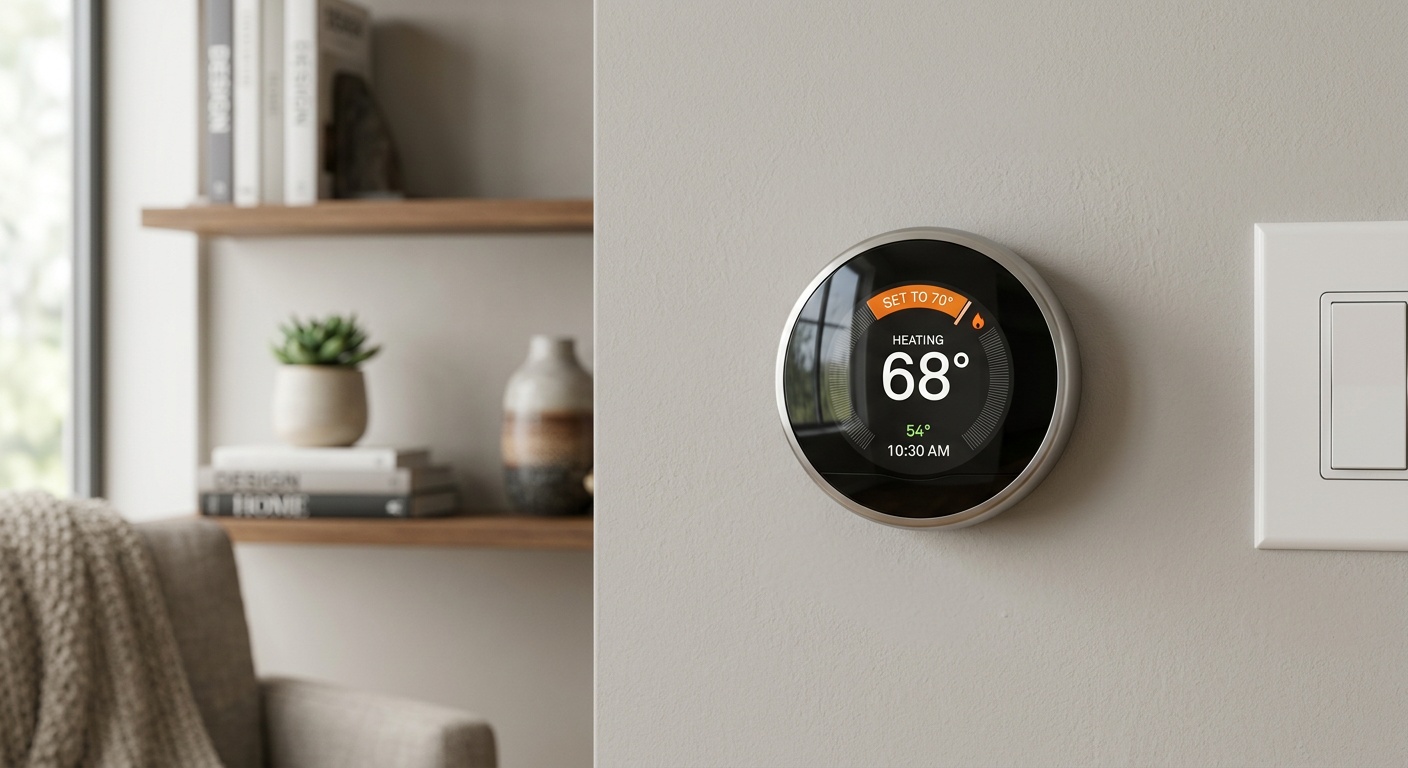
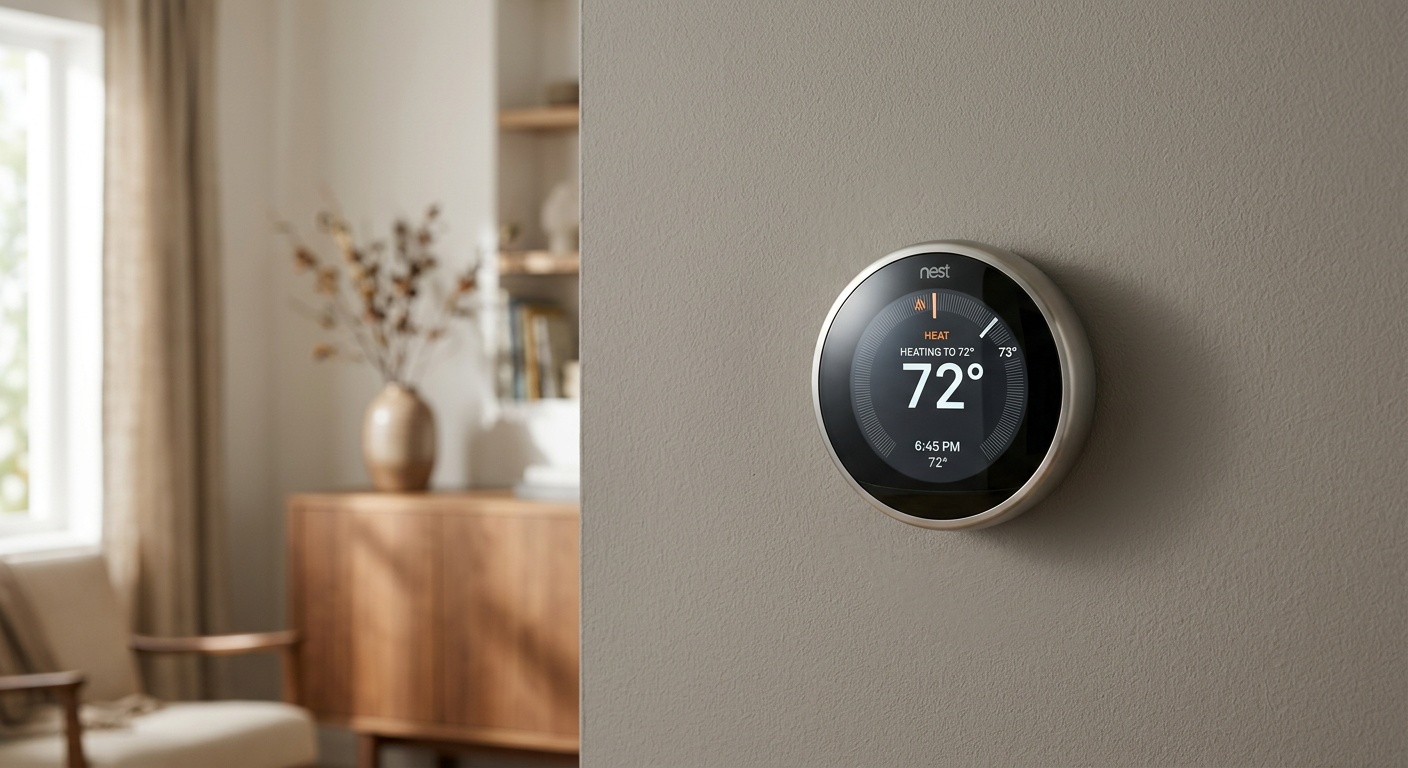
A smart thermostat connects to your home’s Wi-Fi network and typically offers some combination of the following features: machine learning algorithms that adapt to your schedule and preferences, remote control via smartphone apps, geofencing capabilities (adjusting temperature based on your location), real-time energy usage reporting, integration with other smart home devices and voice assistants, and utility company demand-response programs. Leading brands in 2026 include Google Nest, Ecobee, Honeywell Home, Emerson Sensi, and several newer competitors like Tado and Hive in European markets.
Upfront Costs vs. Long-Term Investment
Let’s address the most common objection first: “Smart thermostats are expensive.” This deserves a nuanced answer, because the sticker price is only the beginning of the financial story.
Traditional thermostats range from as little as $15 for a basic manual unit to $80–$120 for a programmable digital model. Installation, if done professionally, adds $75–$150. Total upfront investment: roughly $30–$270 depending on your choice and whether you DIY.
Smart thermostats currently range from around $79 for entry-level models (like the Emerson Sensi Touch 2) to $299 for premium options (like the Ecobee SmartThermostat Premium or the Google Nest Learning Thermostat). Installation runs $100–$200 if professionally installed, though a significant portion of homeowners handle installation themselves in 45–90 minutes. Total upfront investment: approximately $79–$500.
That’s a meaningful difference — but here’s where strategic thinking pays off. Many utility companies across North America and Europe offer rebates of $25–$150 on smart thermostat purchases in 2026 as part of their energy efficiency programs. Several U.S. states also provide tax incentives. Federal energy efficiency credits, extended through the Inflation Reduction Act provisions still active in 2026, can cover a portion of qualifying smart home upgrades. After rebates and incentives, the effective cost gap between smart and programmable thermostats frequently narrows to under $100.
Pro Tip: Before purchasing, visit your utility company’s website or call their efficiency hotline. In 2026, providers like Xcel Energy, Pacific Gas & Electric, and National Grid all have active rebate programs. Some even offer discounted or free smart thermostats directly to customers enrolled in specific rate plans.
The Savings Deep Dive: Where the Numbers Come From
The energy savings cited for smart thermostats — most commonly 10–23% on heating and cooling costs — don’t come from thin air. Let’s trace them to their source and understand which scenarios produce which outcomes.
The foundational research often cited comes from studies by the U.S. Department of Energy, which established that for every degree Fahrenheit you lower your thermostat over an 8-hour period, you save approximately 1% on your heating bill. Nest’s own published studies (later verified by independent researchers from Lawrence Berkeley National Laboratory) found that their thermostat saved users an average of 10–12% on heating costs and 15% on cooling costs, translating to roughly $131–$145 per year in average U.S. conditions.
Ecobee’s internal data from its network of millions of devices in 2024–2025 showed average savings of 23% compared to a “hold 72°F” baseline — though this comparison is somewhat generous since few people actually hold a fixed temperature 24/7. A more conservative real-world comparison against a well-programmed traditional thermostat yields savings of 8–12% annually.
Where do these savings actually originate? Three primary mechanisms:
- Setback scheduling: Automatically reducing temperature when the house is empty or occupants are asleep — consistently and without the forgetting that plagues manual adjustment.
- Adaptive learning: Algorithms that optimize heating and cooling run times, anticipating needs rather than reacting to them, which reduces energy-intensive temperature recovery cycles.
- Geofencing: Ensuring the HVAC system isn’t working hard to heat or cool an empty home when everyone has left for longer than expected periods.
The compounding effect is important here. A household spending $1,800 annually on heating and cooling that achieves a conservative 12% reduction saves $216 per year. Over five years, that’s $1,080. Over ten years, $2,160 — which significantly exceeds the upfront cost of any smart thermostat currently on the market, even before accounting for utility rebates or the increasing value of energy efficiency as rates continue to rise.
At higher energy costs (common in the Northeast U.S., UK, Germany, or Australia), the savings are proportionally larger. A UK household spending £1,200 annually on heating achieving 15% savings would save £180 per year — paying back a mid-range smart thermostat investment in roughly 18 months.
Real-World Case Studies
Case Study 1: The Thompson Family, Minneapolis, Minnesota
The Thompsons — a family of four in a 2,200 square-foot home — had been using a programmable thermostat for nine years. Their annual heating and cooling bill averaged $2,100. They installed a Google Nest Learning Thermostat in early 2024 at a cost of $249, minus a $75 utility rebate from Xcel Energy (net cost: $174).
After 18 months of use, their energy bills showed a consistent 14% reduction in HVAC-related costs, saving approximately $294 annually. Their payback period was just over seven months. Projected over a ten-year thermostat lifespan, their net savings exceed $2,766 after accounting for the initial investment.
What made the difference? The Thompsons’ previous programmable schedule hadn’t been updated in three years and didn’t account for their changed work-from-home patterns. The Nest’s learning algorithm adapted to their actual occupancy within two weeks.
Case Study 2: Maria Sanchez, Apartment in Madrid, Spain
Maria is a single occupant renting a 70 square-meter apartment. She was skeptical about smart thermostats, partly because her landlord controlled the main heating system and partly due to upfront cost concerns. After her landlord agreed to split the cost of a Tado Smart Thermostat (a popular option in Spain and Germany), Maria installed the unit in autumn 2024.
Her winter heating bills dropped by an average of 19% compared to the previous two winters. The geofencing feature proved particularly valuable — her commute to a hybrid work arrangement meant the apartment was often empty unexpectedly, and the traditional thermostat had no way to account for this. Tado’s app also provided granular insights into energy usage patterns she’d never had visibility into before.
Her share of the initial investment was recouped within a single heating season.
Case Study 3: Riverside Office Complex, Austin, Texas
While primarily a residential technology, smart thermostat data from small commercial applications is instructive. The Riverside complex — six small office suites totaling 4,800 square feet — replaced six programmable thermostats with Ecobee SmartThermostat Commercial units in mid-2023. Annual HVAC costs had been running approximately $14,400.
By 2025, the complex reported 21% savings on cooling costs (dominant in Austin’s climate), equating to just over $3,000 annually. The occupancy sensors built into the Ecobee units were cited as the primary driver — conference rooms and individual offices that sat empty for significant portions of the day were no longer being cooled to occupied comfort levels unnecessarily.
Head-to-Head Comparison Table
| Metric | Traditional Thermostat | Smart Thermostat |
|---|---|---|
| Upfront Cost (Device + Install) | $30–$270 | $79–$500 (often reduced by rebates) |
| Annual Energy Savings (avg.) | 0–5% (if well-programmed) | 10–23% vs. unmanaged baseline |
| Typical Payback Period | Immediate (low cost) | 7–24 months |
| 10-Year Net Financial Benefit | Minimal; possible replacement cost | $1,000–$3,000+ depending on usage |
| Remote/App Control | Not available | Full smartphone integration |
Energy Savings at a Glance: Annual Reduction by Thermostat Type
The chart below illustrates average annual energy cost reductions across different thermostat configurations, based on a baseline household spending $2,000/year on HVAC. Data is drawn from aggregated 2024–2025 utility and manufacturer studies.
*Based on a $2,000/year HVAC baseline. Actual savings vary by climate, home size, occupancy patterns, and HVAC system efficiency.
Common Challenges and How to Overcome Them
Challenge 1: Compatibility With Older HVAC Systems
One of the most frequently cited barriers to smart thermostat adoption is compatibility uncertainty. Homes with older oil-fired boilers, certain heat pump configurations, or two-wire heating systems (common in pre-1990 construction) may not be directly compatible with all smart thermostat models.
How to overcome it: Most major brands now offer compatibility checkers on their websites — Ecobee’s and Nest’s are particularly thorough. If your system uses only two wires and lacks a common (C-wire), several workarounds exist: adapter kits (Ecobee includes one), power theft adaptors, or running a new wire (a straightforward job for an HVAC technician). Tado and Hive also have specifically engineered products for European boiler systems. Don’t assume incompatibility without checking — compatibility has improved dramatically since 2023.
Challenge 2: The “Set It and Forget It” Myth
Many users expect their smart thermostat to immediately deliver maximum savings with zero engagement. In reality, the learning algorithms require 1–3 weeks of observed behavior to optimize effectively, and some settings genuinely benefit from user input — particularly defining “home” and “away” temperature thresholds that match your comfort preferences.
How to overcome it: Spend 20–30 minutes during initial setup providing accurate baseline preferences. Most apps now offer a guided setup wizard that walks you through this. Set realistic expectations: you won’t see dramatic bill changes in the first month, but by month three, patterns become clear. Enable energy reports (weekly or monthly email summaries) to maintain visibility without requiring active monitoring.
Challenge 3: Data Privacy Concerns
Smart thermostats collect behavioral data — when you’re home, your sleep patterns, temperature preferences, and occupancy rhythms. This is a legitimate concern for privacy-conscious homeowners, and it deserves honest acknowledgment rather than dismissal.
How to overcome it: Review the privacy policies of any device you consider. In 2026, Google Nest, Ecobee, and Honeywell all allow users to limit data sharing and delete historical data. Ecobee specifically has made privacy customization a marketing differentiator. If data sharing is a firm concern, consider devices with local processing options or those that allow full operation without cloud connectivity. The Tado system, for example, has configurations that minimize cloud dependency.
Frequently Asked Questions
How long does it actually take for a smart thermostat to pay for itself?
The payback period depends primarily on three variables: your current energy spending, the price you pay for the device (after rebates), and your local climate. For most U.S. households with average energy bills, a mid-range smart thermostat pays for itself in 12–18 months. In higher-cost energy markets like New England, the UK, or Germany, payback periods can be as short as 6–10 months. Entry-level models costing under $100 can pay back in as little as 5–8 months in moderate climates. The sweet spot for value is typically a mid-range device at the $130–$200 price point after rebates.
Do smart thermostats actually save money if I already have a well-programmed traditional thermostat?
Yes, but the incremental gain is smaller. A well-programmed 7-day programmable thermostat is already capturing much of the low-hanging fruit of scheduled setbacks. In this scenario, you might realistically expect 6–10% additional savings from a smart upgrade, driven by adaptive learning, geofencing on irregular days, and optimized equipment cycling. For a $1,800/year HVAC household, that’s still $108–$180 annually — meaningful over time, but the payback period will be longer than for someone upgrading from a manual thermostat or a poorly configured programmable unit.
What happens to my savings if energy prices change significantly?
This is one of the most underappreciated aspects of the smart thermostat value proposition. Your percentage savings remain relatively constant, but your absolute dollar savings scale with energy prices. If energy costs rise 15% (as they did broadly between 2023 and 2025 in many markets), your smart thermostat saves you 15% more in dollar terms as well. This makes smart thermostats an implicit inflation hedge on one of your largest household operating costs. Conversely, if energy prices drop substantially, your absolute savings decrease — but your overall bills are also lower, so the impact on household finances is cushioned.
Your Energy Savings Roadmap: Making the Switch in 2026
You now have the context, the numbers, and the real-world evidence. Here’s how to turn this knowledge into action — a concrete, five-step roadmap tailored to where you are right now.
- Step 1 — Audit Your Current Situation: Pull your last 12 months of utility bills and calculate your average monthly HVAC cost. Identify whether you have a manual, programmable, or existing smart thermostat. This baseline is your benchmark for measuring future savings.
- Step 2 — Check Compatibility and Rebates Before Buying: Visit your utility company’s website and search for “smart thermostat rebate.” Then use the compatibility checkers on Nest, Ecobee, or Honeywell’s websites before selecting a model. In many cases, rebates will dictate which model offers the best net value.
- Step 3 — Choose the Right Device for Your Lifestyle: If you have a predictable, regular schedule, an entry-level smart thermostat delivers strong ROI. If your schedule is irregular or you have multiple occupants with varying patterns, invest in a model with room sensors (Ecobee) or strong geofencing (Tado, Nest). Don’t over-invest in premium features you won’t use.
- Step 4 — Install and Configure Thoughtfully: Whether you DIY or hire a pro, ensure the initial setup properly defines your occupied/unoccupied temperature ranges, enables geofencing, and activates energy reporting. These three settings account for the majority of realized savings.
- Step 5 — Track and Optimize Over 90 Days: Use the app’s energy dashboard to review your first three months. Look for anomalies — unusually high usage days, equipment that runs longer than expected, or settings that need refinement. Treat the first quarter as a calibration period, not a final verdict.
As smart grid technology continues to expand in 2026 and beyond, smart thermostats are increasingly becoming nodes in a broader energy management ecosystem — connecting to solar panels, battery storage systems, and utility demand-response programs in ways that will amplify savings further. Getting on board now means building a foundation for that more integrated energy future.
Here’s the question worth sitting with: If your thermostat could reliably return $150–$460 every single year for the next decade, pay for itself in under two years, and require only a few hours of setup — what’s actually holding you back from making that call today?